The 1984–85 Star Michael Jordan #101 Rookie Card — Early Decisions That Shape the Outcome
The Situation
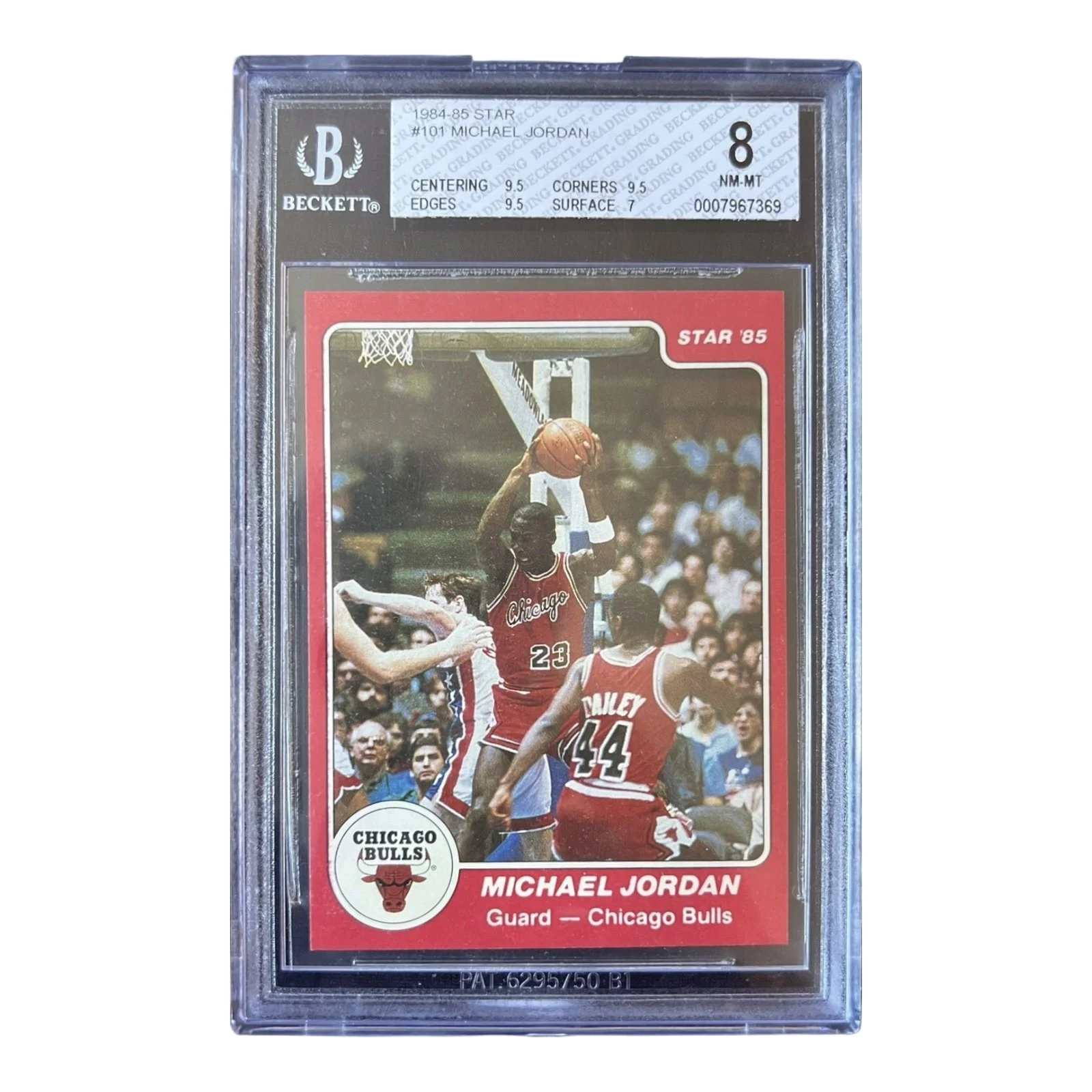
A high-profile basketball card surfaces after years in a collection. It carries third-party grading, strong visual presentation, and a name that immediately draws attention. The owner is faced with competing signals: confidence from encapsulation, enthusiasm from market narratives, and pressure to act while interest feels strongest. Conversations quickly move toward selling, regrading, or repositioning—often before the right questions are asked.
What Most People Do Wrong at This Stage
At this point, many owners move too quickly. They anchor on a grade, focus on perceived upside, or compare selectively to other examples online. Some assume that eye appeal resolves uncertainty. Others treat third-party labels as final answers rather than partial inputs. The most common mistake is acting before understanding what actually matters—and what does not.
Why This Category Is Uniquely Risky
Early basketball issues, especially from non-mainstream releases, create structural risk. Scarcity narratives, grading nuances, and historical context combine to produce false confidence. Small decisions—how the card is described, where it is shown, or whether it is altered in any way—can permanently narrow options. Once mishandled, pathways close quietly and cannot be reopened.
What Actually Has to Be Determined First
Before any action, professionals pause to consider:
Whether authenticity or classification is the controlling factor
Whether condition already limits certain outcomes regardless of presentation
Whether existing grading answers the right question—or the wrong one
Whether additional review would materially change decisions
Whether restraint is safer than intervention
These questions must be identified before they are answered.
The Decision Fork
Path 1 — Professional Review (Primary)
When being wrong carries financial, legal, or irreversible consequences, professional review is the safest next step. This is especially true for cornerstone cards associated with figures like Michael Jordan, where assumptions travel faster than facts. Most clients begin with an Online Fast Opinion to determine whether further appraisal or authentication is warranted and whether additional steps add clarity or risk.
Path 2 — First-Stage Self-Education (Secondary)
For those who need context before engaging professional services, the DJR Discovery Guide Why the First Decision Matters More Than the Final Price provides a first-stage framework for understanding how early choices influence long-term outcomes. It is designed to control decision risk—not to replace professional review or resolve authenticity, value, or market positioning.
The "Professional Standard"
The most expensive mistakes are rarely made at the point of sale. They are made earlier, when confidence replaces discipline and action precedes understanding. In high-risk categories, restraint is often the most professional first decision.