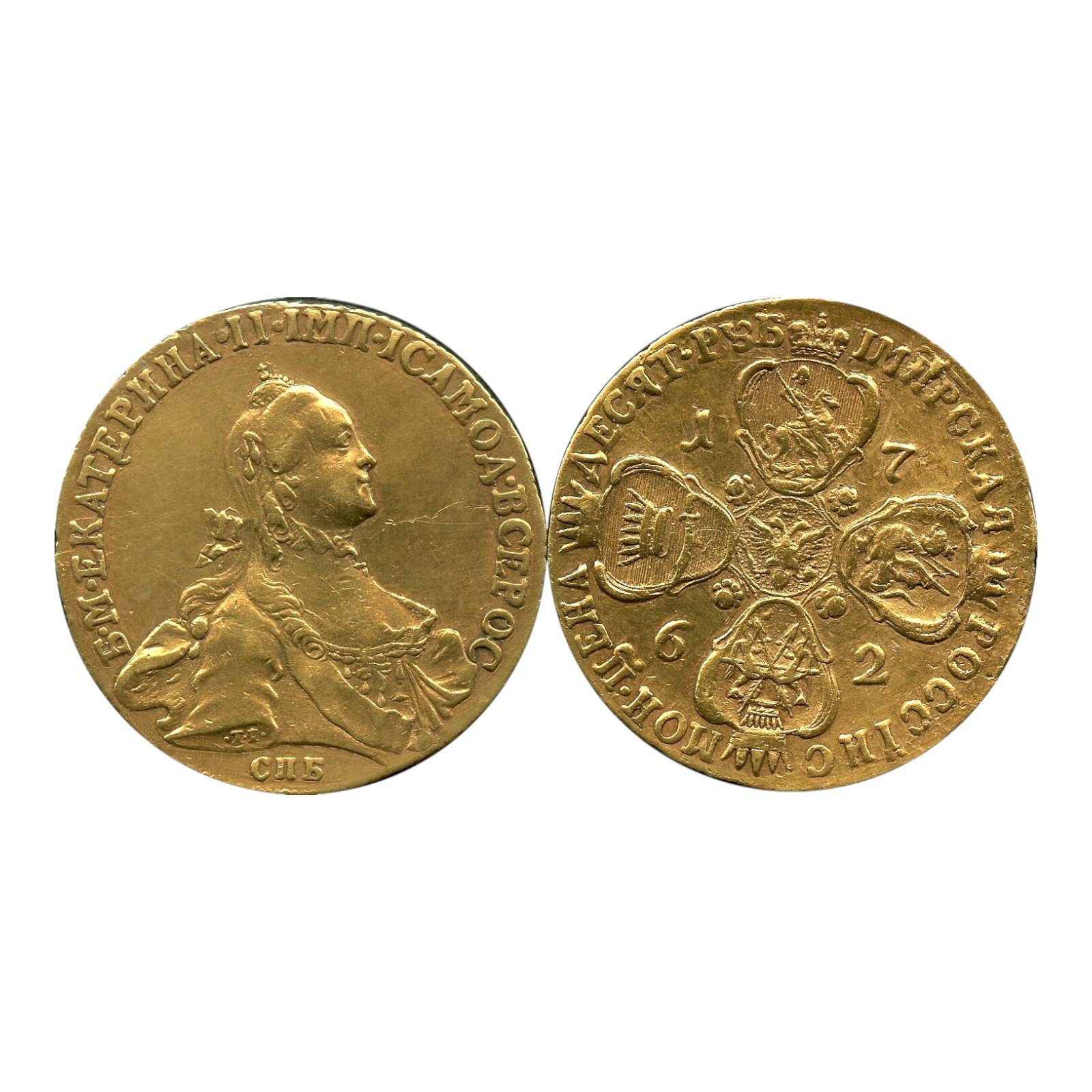
The 1762 Russia 10 Roubles of Catherine II — When Rarity Creates False Certainty
The Situation
An early Russian gold coin appears, tied to a brief and historically charged moment. The date, metal, and ruler immediately signal importance. Auction records, catalog references, and low mintage figures circulate quickly. The owner is faced with overlapping pressures: historical significance, perceived scarcity, and the instinct to position the coin decisively—often before its true risk profile is understood.
What Most People Do Wrong at This Stage
At this stage, many collectors assume rarity equals safety. They rely heavily on mintage figures, catalog citations, or past price mentions without understanding how those references function in modern markets. Others focus on metal content or age while overlooking factors that quietly determine institutional acceptance. The most common error is assuming that “rare” resolves uncertainty rather than creating it.
Why This Category Is Uniquely Risky
Imperial Russian gold occupies a narrow and highly sensitive market. Small variables—surface condition, past cleaning, attribution nuances, and documentation gaps—can dramatically alter how an otherwise impressive coin is classified and received. In this category, historical importance often amplifies risk rather than reducing it, especially when early assumptions harden too quickly.
What Actually Has to Be Determined First
Before any action, professionals step back to identify:
Whether historical significance translates into market viability
Whether condition factors already limit institutional pathways
Whether catalog listings clarify attribution or merely describe existence
Whether professional review would materially change positioning
Whether restraint preserves more options than immediate action
These questions must be named before any outcome is pursued.
The Decision Fork
Path 1 — Professional Review (Primary)
When decisions involve material value, historical artifacts, or irreversible market consequences, professional review is the safest next step. Coins associated with figures such as Catherine the Great frequently carry assumptions that outpace verification. Most clients begin with an Online Fast Opinion to determine whether further appraisal or authentication is warranted—and whether escalation adds clarity or unnecessary exposure.
Path 2 — First-Stage Self-Education (Secondary)
For those seeking context before engaging professional services, the DJR Discovery Guide Why the First Decision Matters More Than the Final Price provides a first-stage framework for understanding how early assumptions shape long-term outcomes. It is designed to reduce decision risk—not to replace professional review or resolve authenticity, value, or market placement.
The "Professional Standard"
In historically dense categories, the costliest errors are rarely obvious. They occur quietly, when confidence replaces discipline. When stakes are high, restraint is often the most defensible first decision.