The 1924 Bela Lugosi Actors’ Equity Contract — When Early Documents Invite Premature Confidence
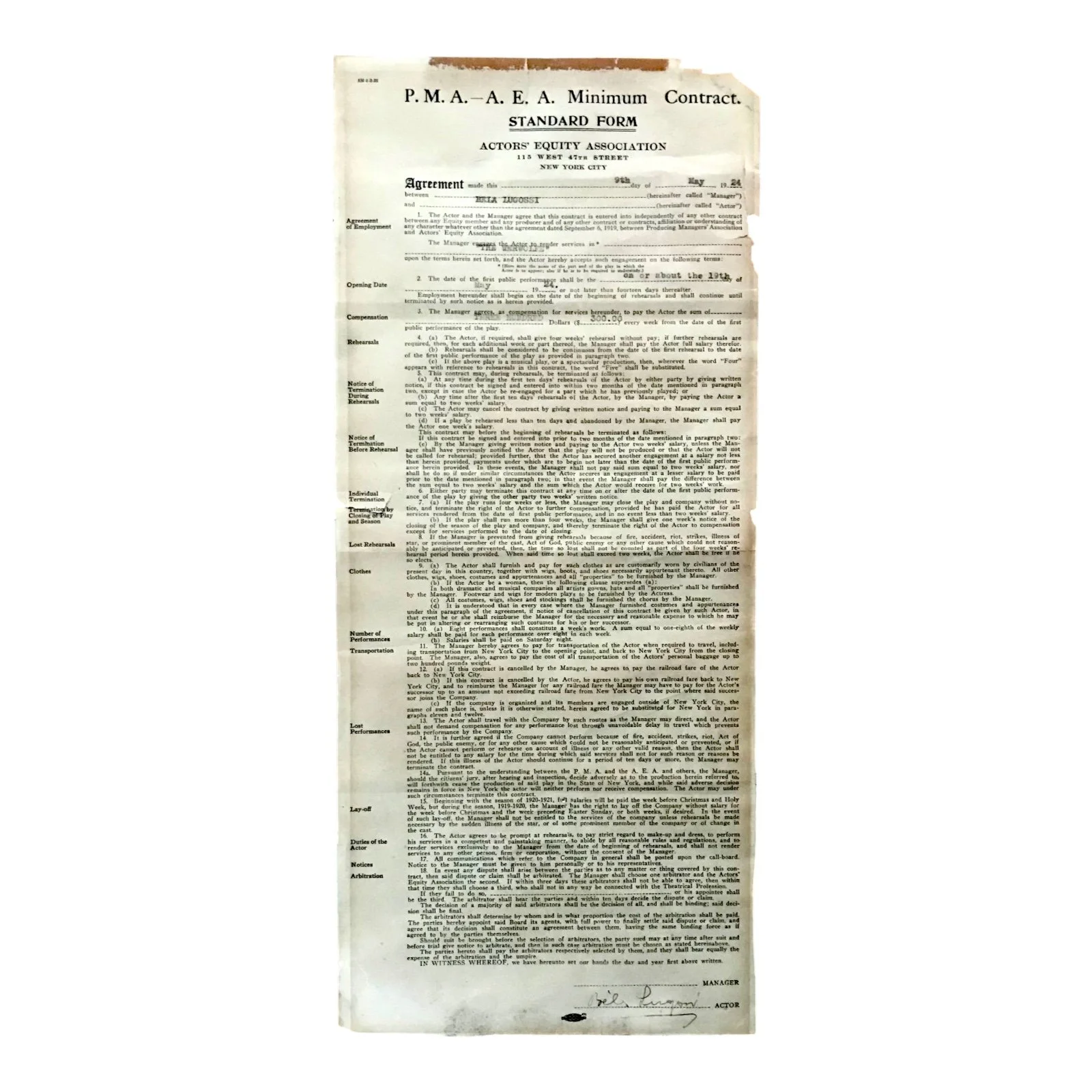
The Situation
An early theatrical contract surfaces, dated well before widespread public recognition. The document reflects a routine stage engagement, printed on period paper and bearing a handwritten signature attributed to a working actor at the beginning of his career. Family custody and age-consistent wear reinforce its historical character, while the association with a figure later known worldwide introduces immediate gravity—and quiet pressure to interpret it decisively.
Where Early Decisions Go Wrong
At this stage, many owners equate age and provenance with certainty. Others assume that later fame simplifies attribution or that familiar autograph examples can be applied backward without adjustment. In document-driven material, early enthusiasm often replaces evidentiary discipline. The most common mistake is allowing historical interest to harden into conclusions before the underlying questions are identified.
Why This Category Carries Unique Risk
Pre-fame signed documents occupy a narrow and unforgiving category. Comparable exemplars are scarce, signature habits were still evolving, and recordkeeping standards varied widely. With figures such as Bela Lugosi, later notoriety can distort expectations, creating confidence that is not supported by the available evidence. Small assumptions made early can quietly undermine credibility later.
What Must Be Determined First
Before any action, professionals pause to consider:

Whether authorship of the signature is the primary issue
Whether the document’s function matters more than the autograph itself
Whether condition or handling already limits downstream options
Whether professional review would materially change confidence
Whether restraint preserves flexibility better than action
These questions must be named before any conclusion is pursued.
The Decision Fork
Path 1 — Professional Review
When early documents involve historical figures, attribution risk, or potential market exposure, a first-stage professional review is the safest place to begin. Most clients start with an Online Fast Opinion—a first-stage professional review—to determine whether further appraisal or authentication is warranted, and whether escalation adds clarity or unnecessary exposure. This approach separates historical interest from evidentiary strength before irreversible decisions are made.
Path 2 — Preliminary Self-Education
For those who want context before engaging professional services, the DJR Discovery Guide Why the First Decision Matters More Than the Final Price provides a first-stage framework for understanding how early assumptions quietly shape long-term outcomes. It is designed to reduce decision risk—not to replace professional review or resolve authenticity, attribution, or market positioning.
Before You Act
In document-driven categories, confidence often arrives before clarity. The most costly errors tend to occur quietly, when early assumptions narrow options that cannot later be recovered. Disciplined restraint is often the most defensible first decision.