Shohei Ohtani’s First MLB Home Run Inscribed Baseball Represents the Beginning of a Generational Career
The Situation
Few modern athletes have altered the trajectory of their sport the way Shohei Ohtani has altered baseball. Long before MVP awards, World Series championships, and historic two-way dominance, there was a single moment that marked the start of his Major League legacy—his first MLB home run on April 3, 2018.
Artifacts tied directly to that moment occupy a uniquely narrow category. They do not commemorate peak performance or retrospective achievement. They document origination—the precise point where a generational career entered Major League history.
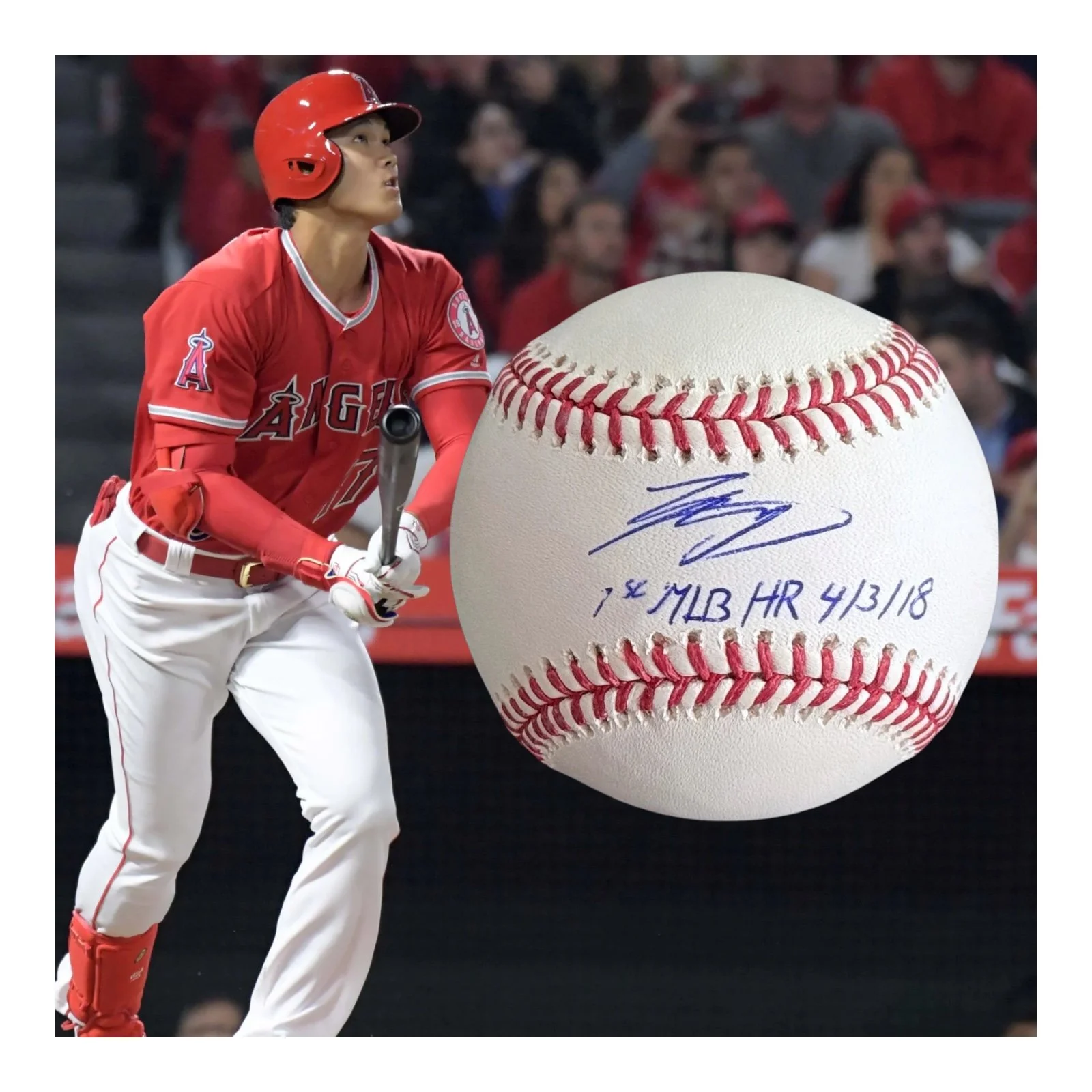
An official MLB baseball signed and inscribed “1st MLB HR 4/3/18” is not simply an autograph. It is a contemporaneous record of origin.
Why First-Moment Artifacts Carry Disproportionate Historical Weight
In modern sports memorabilia, most signed items reference a career already in motion. Milestone inscriptions tied to firsts—first home run, first hit, first appearance—are categorically different.
They anchor an athlete’s narrative before outcomes were known.
For Ohtani, that distinction is especially significant. His first MLB home run predates:
Multiple MVP awards
World Series championships
Historic 50 home run / 50 stolen base production
Recognition as the most dominant modern two-way player in baseball history
As careers mature, early artifacts become increasingly scarce—not because fewer were produced, but because fewer survive with credible documentation, period-correct inscriptions, and institutional authentication intact.
What Separates This Baseball From Later Commemoratives
Not all Ohtani signed baseballs are equal, and advanced collectors understand the difference.
This example is defined by three factors that rarely converge:
A first-career milestone inscription, executed directly on an official MLB baseball
Dual institutional authentication, verified by both Topps Authentics and MLB
Direct association with Ohtani’s first Major League home run, not a retrospective achievement
As Ohtani’s accomplishments have compounded, later inscriptions have become increasingly symbolic. Early inscriptions—especially those referencing firsts—remain documentary.
Once lost to time, they cannot be recreated.
Why Condition and Documentation Matter at This Tier
At six-figure levels, collectors and institutions are not acquiring signatures—they are acquiring credibility.
Artifacts tied to the beginning of a historic career must withstand:
Institutional scrutiny
Provenance evaluation
Long-term public representation
Inscribed baseballs referencing first milestones are frequently questioned, misrepresented, or inadequately documented in the secondary market. Dual authentication from Topps and MLB materially changes that risk profile.
It establishes a standard that aligns with museum-grade collecting, not speculative memorabilia.
Ohtani’s Career Context as of 2026
As of 2026, Shohei Ohtani’s résumé includes:
Multiple Most Valuable Player awards
World Series championships
Record-setting offensive production
Historic power-speed seasons
Unprecedented two-way impact in the modern era
Against that backdrop, artifacts tied to April 3, 2018 no longer represent promise. They represent provenance.
This baseball marks the documented beginning of a career that has already reshaped the record books.
Availability and Acquisition
True first-moment artifacts rarely re-enter the market once placed in advanced collections. When they do, they are evaluated not against other autographs—but against institutional standards of historical relevance.
This Shohei Ohtani signed baseball inscribed “1st MLB HR 4/3/18” is currently offered through DJR Authentication’s curated inventory.
View the Shohei Ohtani First MLB Home Run Inscribed Baseball Listing
Closing Perspective
As Ohtani’s legacy continues to solidify, the distance between his earliest Major League moments and the present will only widen. Artifacts tied to the exact beginning of that story do not gain relevance later—they either exist now, or they do not.
For collectors and institutions focused on origin, documentation, and long-term historical positioning, first-moment pieces occupy a category of their own.