Pre-CBS Fender Stratocasters — Authentication Risk, Parts Swaps, and Auction Failure Exposure
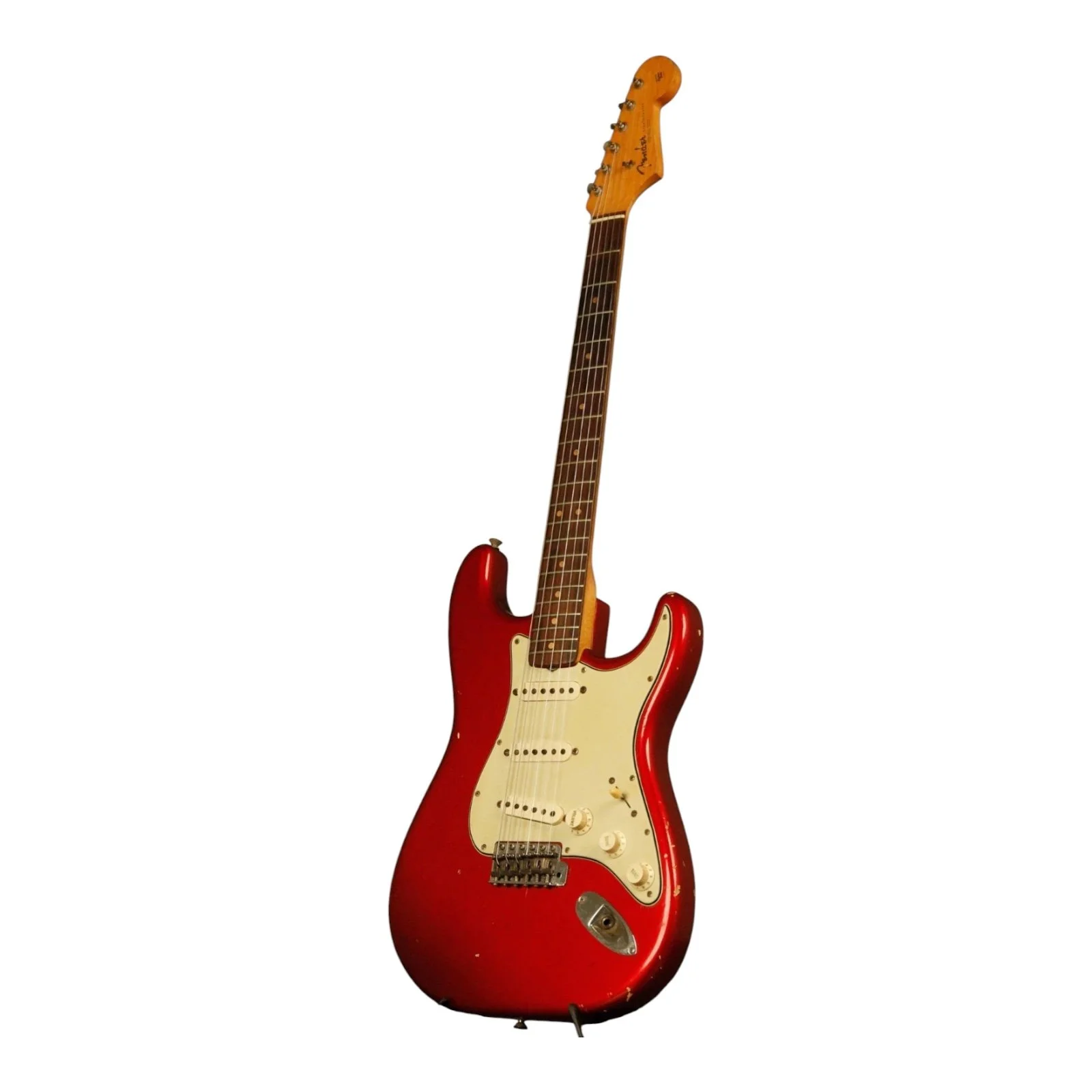
1964 Pre-CBS Fender Stratocaster in Candy Apple Red with documented 1960s factory nitro refinish — originality, finish history, and component alignment directly impact authentication and auction positioning.
Introduction — The False Confidence Problem
Pre-CBS Fender Stratocasters occupy a legendary position in vintage guitar collecting. The term “Pre-CBS” alone carries weight. Collectors associate it with early craftsmanship, tonal reputation, and significant market value. Because of that reputation, many assume identification is straightforward.
It is not.
A guitar may look correct at first glance. The finish appears aged. The headstock shape feels right. The logo resembles known examples. Confidence builds quickly — often before structural verification occurs.
DJR Authentication specializes in professional evaluation of high-value Pre-CBS Fender Stratocasters and related collectible assets.
The reality is that body contours, routing cavities, neck dates, decals, electronics, and hardware must align across multiple components. A Stratocaster can contain original parts, later replacements, refinishes, or subtle alterations that materially affect classification and value. Many instruments presented as “all original” are not.
In this market, assumptions become expensive quickly.
Where Most Collectors Go Wrong
Assuming visible aging confirms originality
Relying on logo appearance without structural verification
Ignoring subtle differences in body contour or routing
Overlooking neck heel dates and pencil markings
Accepting electronic components at face value
Believing partial originality equals full collector-grade status
Trusting prior owner statements without documentation
Vintage guitars are modular instruments. Components can be replaced, refinished, or modified while preserving outward appearance. As a result, even experienced players and collectors can overlook discrepancies that materially affect value.
The Pre-CBS designation carries premium pricing. That premium creates incentive for misrepresentation — intentional or otherwise.
Why This Category Carries Elevated Risk
Several structural factors elevate authentication risk in Pre-CBS Stratocasters.
First, originality is component-based. Body, neck, pickups, pots, wiring harness, decals, and hardware must be evaluated in relation to each other. One mismatched element can materially alter classification.
Second, refinishes and overspray can obscure original characteristics. Surface appearance alone cannot confirm factory finish.
Third, parts swapping has occurred for decades. A guitar may contain authentic Pre-CBS components assembled at a later date. Classification must distinguish between original factory assembly and later composites.
Fourth, auction houses and high-level collectors scrutinize these instruments closely. Guitars that appear acceptable privately may face reclassification or value reduction during formal review.
In this category, a single misidentified item can represent thousands or even tens of thousands of dollars in financial exposure.
The interaction between wood selection, routing patterns, neck markings, electronics dating, and headstock decal style creates layered complexity. Casual inspection is insufficient.
This cannot be confirmed casually.
What Must Be Verified First
Before authenticity or value can be established with confidence, several professional checkpoints must align:
Body contour and routing characteristics consistent with documented Pre-CBS production
Neck heel dates, pencil marks, and stamp alignment
Decal font and headstock profile consistency
Pickup construction and electronic component dating
Evidence of refinish, overspray, or structural modification
Exposure to auction reclassification or appraisal reduction
These variables must align before authenticity or value can be established with confidence.
Isolated originality does not equal full collector-grade status. Structured evaluation considers the instrument as an integrated whole.
Path 1 — Professional Review
Professional evaluation is appropriate:
Before purchasing at Pre-CBS price levels
Prior to auction consignment
When selling privately to collectors
For insurance or estate documentation
When originality or finish status is uncertain
Start with a professional evaluation.
Early evaluation prevents costly mistakes and protects your position before a transaction, submission, or sale.
Most clients begin with an Online Fast Opinion to determine authenticity risk and whether further documentation is warranted.
In-person consultations are available by appointment in Charleston, SC.
Early review protects long-term liquidity and resale credibility.
Path 2 — Complete Education System
For collectors who want structured context before professional review, the Pre-CBS Fender Stratocaster Authentication & Ownership System provides a comprehensive framework.
The system addresses:
Body construction and routing characteristics
Neck dating and stamp evaluation
Decal and headstock authentication considerations
Electronic component and pickup originality risk
Appraisal, auction, and ownership documentation strategy
Collectors who want a structured framework before seeking professional review can explore the DJR Expert Guide Library.
Education strengthens awareness. Professional evaluation protects financial outcomes.
Before You Act
Most costly mistakes occur before professional evaluation.
Confidence should follow verification, not precede it.
Early assumptions create irreversible financial exposure — particularly in high-value vintage guitar markets where originality defines value.
Professional review preserves credibility, protects auction positioning, and prevents costly reclassification.
With Pre-CBS Fender Stratocasters, the most important decision happens before a transaction, listing, or consignment.