Original Sealed First-Generation iPhone — Authentication Exposure, Reseal Risk, and Encapsulation Failure
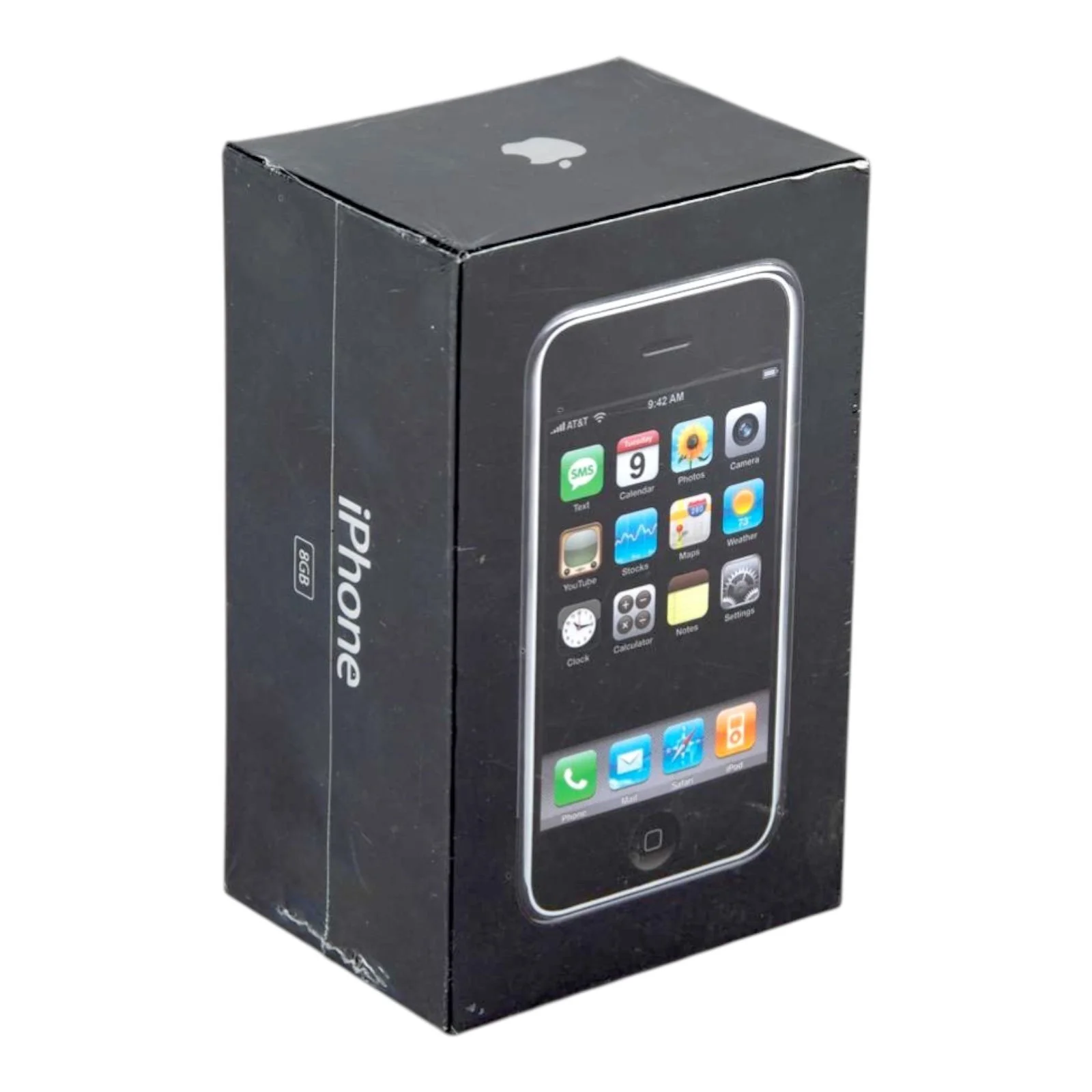
Original 2007 first-generation iPhone retail box — shrink wrap integrity, label formatting, and activation status must be verified before grading or resale positioning.
Introduction — The False Confidence Problem
An original sealed first-generation iPhone carries powerful visual impact. The shrink wrap looks tight. The box corners appear crisp. The Apple branding is familiar. To many collectors, those surface signals create immediate certainty.
That certainty is often misplaced.
The 2007 iPhone has become a modern tech collectible with significant market upside. As values have risen, so has reseal activity, box swapping, and internal component manipulation. A box that appears untouched can conceal activation history, mismatched serial labeling, or internal replacement risk.
DJR Authentication specializes in professional evaluation of high-value original sealed first-generation iPhones and related collectible technology assets.
Shrink wrap alone does not establish factory seal status. Serial number formatting, model consistency, seam construction, pull tab behavior, and activation exposure must align before authenticity or long-term value can be established.
In this market, assumptions become expensive quickly.
Where Most Collectors Go Wrong
Treating tight shrink wrap as proof of factory sealing
Ignoring seam placement and wrap texture inconsistencies
Assuming box labels automatically match internal devices
Overlooking model number formatting variations
Believing activation status does not materially affect value
Confusing rewrapped units with original untouched examples
Submitting for grading without pre-evaluation
The modern collectible electronics market differs from traditional antiques. Packaging, internal components, and digital activation history all influence classification. Unlike static collectibles, sealed electronics carry both physical and data-based risk.
Visual familiarity is not verification.
Why This Category Carries Elevated Risk
Several factors elevate risk in sealed first-generation iPhones.
First, shrink wrap can be replicated. Seam lines and pull tabs may appear convincing without meeting original factory standards.
Second, box labels and serial numbers must correspond structurally. Formatting inconsistencies or mismatched identifiers materially affect classification.
Third, activation and IMEI exposure introduce invisible risk. A unit may appear sealed while internal components have been accessed or swapped.
Fourth, encapsulation services scrutinize sealed electronics carefully. Reseal indicators, box irregularities, or serial inconsistencies can result in grading rejection.
In this category, a single misidentified item can represent thousands or even tens of thousands of dollars in financial exposure.
The combination of physical packaging analysis and digital verification creates a layered authentication environment. Casual inspection cannot reliably address both.
This cannot be confirmed casually.
What Must Be Verified First
Before authenticity or value can be established with confidence, multiple variables must align:
Shrink wrap construction consistent with 2007 factory standards
Seam line positioning and pull tab characteristics
Box label formatting and model number consistency
Serial number structure and cross-reference accuracy
Activation status and IMEI exposure assessment
Encapsulation eligibility and grading exposure risk
These variables must align before authenticity or value can be established with confidence.
Failure in any one category can materially alter liquidity, grading potential, or resale positioning.
Path 1 — Professional Review
Professional evaluation is appropriate:
Before purchasing at sealed premium levels
Prior to auction consignment
When considering encapsulation submission
For insurance or estate documentation
When serial or activation status is uncertain
Start with a professional evaluation.
Early evaluation prevents costly mistakes and protects your position before a transaction, submission, or sale.
Most clients begin with an Online Fast Opinion to determine authenticity risk and whether further documentation is warranted.
In-person consultations are available by appointment in Charleston, SC.
Early review protects capital in a category where packaging drives price.
Path 2 — Complete Education System
Collectors who prefer structured education before seeking professional review can explore the Original Sealed First-Generation iPhone Authentication & Ownership System.
The system addresses:
Factory shrink wrap construction principles
Label formatting and serial structure analysis
Activation and internal swap exposure
Encapsulation risk management
Ownership and resale strategy
Collectors who want a structured framework before seeking professional review can explore the DJR Expert Guide Library.
Education clarifies risk. Professional review protects financial outcomes.
Before You Act
Most costly mistakes occur before professional evaluation.
Confidence should follow verification, not precede it.
In sealed technology collectibles, early assumptions can permanently impact grading eligibility and resale credibility.
Professional review preserves options and protects long-term liquidity.
With original sealed first-generation iPhones, the critical decision happens before purchase, submission, or sale.