Martin D-28 Acoustic Guitars — Authentication Risk, Brazilian Rosewood Exposure, and Costly Modification Errors
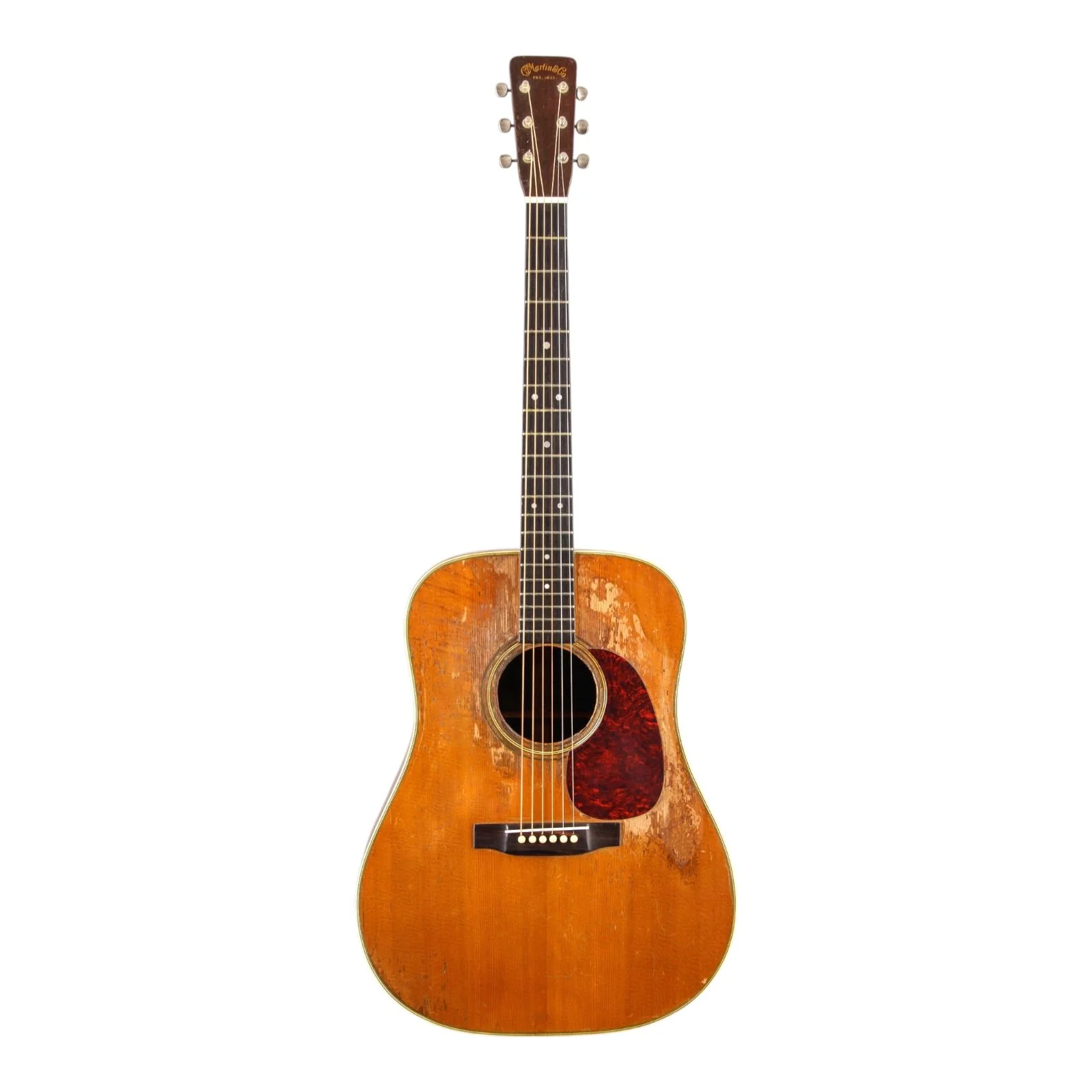
1954 Martin D-28 featuring Brazilian rosewood and spruce top — serial verification, neck block integrity, bridge originality, finish authenticity, and structural condition determine classification and vintage market tier positioning.
Introduction — The False Confidence Problem
The Martin D-28 is one of the most iconic acoustic guitars ever produced.
Collectors recognize the herringbone trim, dreadnought body, and rosewood back and sides instantly. Serial numbers appear straightforward. Headstock logos look consistent. Many assume authenticity can be confirmed visually within minutes.
That confidence is often misplaced.
Pre-war vs post-war construction differences, Brazilian vs East Indian rosewood identification, replaced bridges, altered bracing, neck resets, overspray, and serial number inconsistencies create layered complexity. Cosmetic originality and structural originality are not the same.
DJR Authentication specializes in professional evaluation of vintage and high-value Martin D-28 acoustic guitars.
In this category, structural integrity and originality determine classification and value tier. Surface familiarity is not verification.
In this market, assumptions become expensive quickly.
Where Most Collectors Go Wrong
Assuming serial numbers alone confirm era accuracy
Misidentifying Brazilian rosewood without structural analysis
Ignoring replaced bridges or modified bracing
Overlooking neck block stamps and internal markings
Treating neck resets as neutral without documentation
Accepting overspray as “minor touch-up” without evaluation
Confusing clean appearance with original condition
The Martin D-28 has been repaired, modified, refinished, and restored extensively over decades. Many changes are subtle. Some are intentional. Others materially affect valuation tier.
Recognition is not confirmation.
Why This Category Carries Elevated Risk
Several structural factors elevate risk in Martin D-28 guitars.
First, Brazilian rosewood commands a premium. Misidentification can materially distort value. Grain pattern and coloration alone are insufficient. Construction period must align with documented production data.
Second, headstock logos and serial number stamps must be evaluated in context. Repaired neck blocks and altered stamps exist.
Third, structural modifications—such as replaced bridges, shaved braces, or non-original pickguards—can significantly impact classification.
Fourth, finish originality is critical. Overspray and refinishing reduce market tier placement, even when cosmetically attractive.
Fifth, condition exposure matters. Neck resets, top cracks, and humidity-related warping require professional interpretation.
In this category, a single misidentified structural element can represent tens of thousands of dollars in financial exposure.
Vintage acoustic guitars combine craftsmanship, restoration history, and collector expectation. Evaluation must integrate construction, materials, and modification history.
This cannot be confirmed casually.
What Must Be Verified First
Before authenticity or valuation can be established with confidence, several checkpoints must align:
Serial number and neck block consistency
Headstock logo period accuracy
Wood species verification aligned with production year
Bridge, bracing, and pickguard originality
Finish integrity and overspray detection
Structural condition including neck angle and top stability
These variables must align before authenticity or value can be established with confidence.
Each component affects classification. Classification affects market tier.
Path 1 — Professional Review
Professional evaluation is appropriate:
Before purchasing a high-value D-28
Prior to auction consignment
When Brazilian rosewood identification is claimed
For insurance or estate documentation
When restoration history is unclear
Start with a professional evaluation.
Early evaluation prevents costly mistakes and protects your position before acquisition or resale.
Most clients begin with an Online Fast Opinion to determine structural risk and whether deeper documentation is warranted.
In-person consultations are available by appointment in Charleston, SC.
Vintage guitar markets reward verified originality.
Path 2 — Complete Education System
Collectors who want structured context before professional review can explore the Martin D-28 Authentication & Ownership System.
The system addresses:
Serial number interpretation
Pre-war vs post-war construction differences
Rosewood identification fundamentals
Structural modification exposure
Finish and restoration risk
Long-term ownership and resale positioning
Collectors who want a structured framework before seeking professional review can explore the DJR Expert Guide Library.
Education builds awareness. Professional evaluation protects capital.
Before You Act
Most costly mistakes occur before professional evaluation.
Confidence should follow verification, not precede it.
Vintage Martin D-28 guitars carry prestige and market weight. They also carry layered structural exposure.
Professional review protects value, strengthens resale credibility, and reduces reclassification risk.
With a Martin D-28, the most important decision happens before purchase, restoration, or consignment.