Louis Comfort Tiffany Favrile Glass — Authentication Risk, Signature Variants, and Costly Surface Restoration Errors
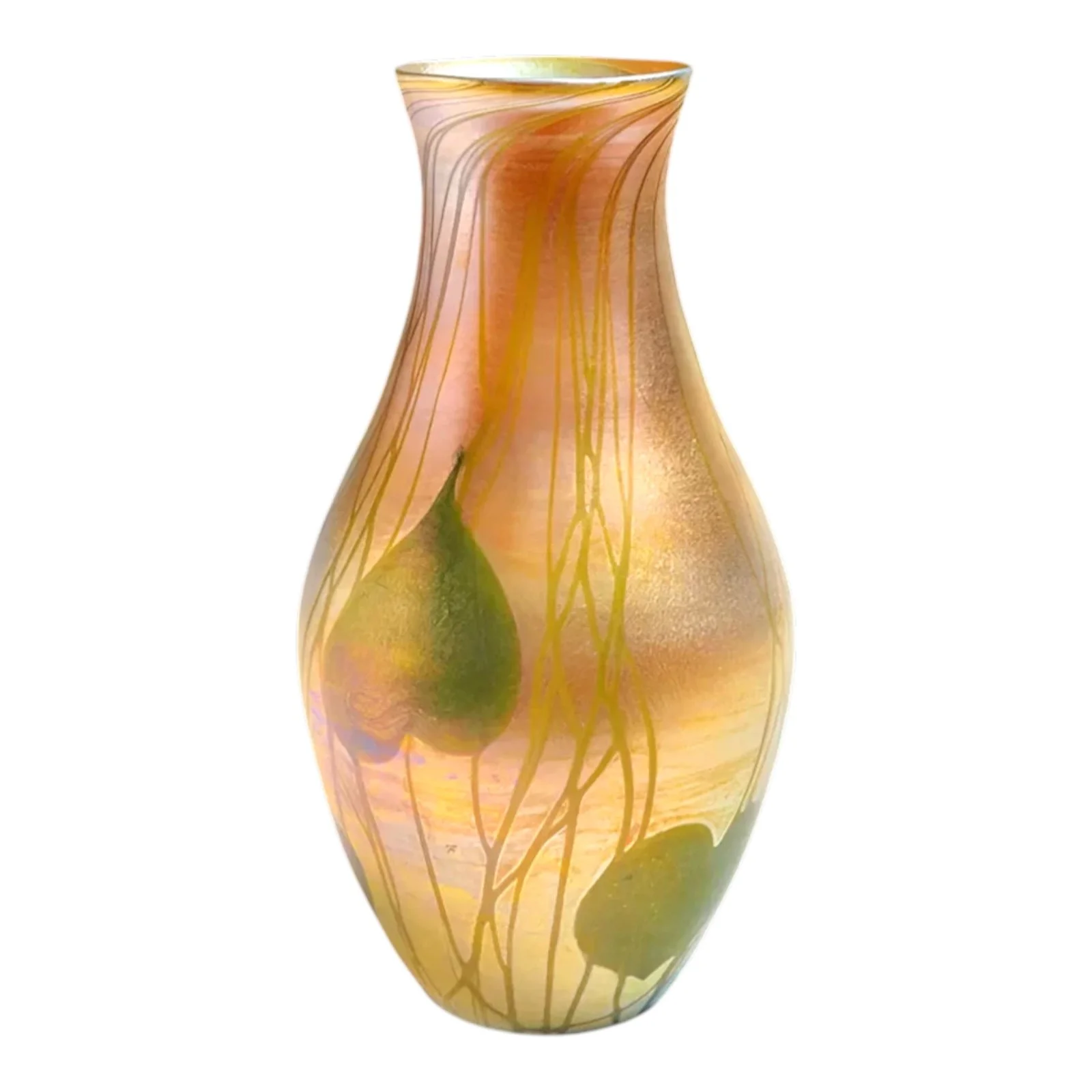
Louis Comfort Tiffany Studios Favrile glass vase with iridescent leaf and vine motif — embedded iridescence, signature format, pontil finishing, and surface restoration exposure must align before authentication and valuation tier placement.
Introduction — The Illusion of Iridescence
Favrile glass is immediately recognizable.
The iridescent sheen. The flowing color striations. The organic forms. Many collectors assume that strong surface iridescence alone confirms authenticity.
That assumption is where exposure begins.
Authentic Louis Comfort Tiffany Favrile glass reflects specific production methods, chemical composition, internal color behavior, and documented signature formats. Modern studio reproductions can visually approximate iridescence but fail structurally under disciplined examination.
DJR Authentication specializes in professional evaluation of Louis Comfort Tiffany Favrile glass and related high-value decorative arts.
In this category, surface beauty is not proof of origin.
In this market, assumptions become expensive quickly.
Where Most Collectors Go Wrong
Treating iridescence as automatic authentication
Assuming any “L.C.T.” mark confirms Tiffany origin
Overlooking pontil finishing characteristics
Ignoring mold-blown vs free-blown structural indicators
Accepting polished rims without question
Confusing studio art glass with documented Favrile production
Relying solely on auction descriptions
Favrile glass has been studied, copied, and reinterpreted for over a century. Visual similarity does not equate to documented Tiffany production.
Recognition is not verification.
Why This Category Carries Elevated Risk
Several structural factors elevate risk in Favrile glass.
First, iridescence results from specific chemical processes integrated into the glass itself — not surface coatings. Modern reproductions often simulate sheen rather than embed it within the glass body.
Second, signature variations matter. Acid-etched stamps, engraved L.C.T. signatures, and pontil-area markings must align with documented periods and production ranges.
Third, form analysis is critical. Mold-blown versus free-blown techniques reveal production methods consistent with Tiffany Studios.
Fourth, condition exposure directly impacts value. Polishing, rim grinding, and restoration can materially alter classification tier.
In this category, a single misidentified restoration or signature inconsistency can represent substantial financial exposure.
Favrile glass sits at the intersection of decorative art, material science, and market prestige. Authentication is layered.
This cannot be confirmed casually.
What Must Be Verified First
Before authenticity or value can be established with confidence, several checkpoints must align:
Embedded iridescence versus applied surface coating
Signature format and placement consistency
Pontil finishing characteristics
Form and production method alignment
Restoration or polishing exposure
Auction-level scrutiny risk
These variables must align before authenticity or value can be established with confidence.
Each structural detail informs classification. Classification determines market tier.
Path 1 — Professional Review
Professional evaluation is appropriate:
Before acquiring high-value Favrile glass
Prior to auction consignment
When signature authenticity is uncertain
For insurance or estate documentation
When restoration exposure is suspected
Start with a professional evaluation.
Early evaluation prevents costly mistakes and protects your position before acquisition or resale.
Most clients begin with an Online Fast Opinion to determine authenticity and restoration risk.
In-person consultations are available by appointment in Charleston, SC.
Surface beauty should be verified before capital is committed.
Path 2 — Complete Education System
Collectors who want structured context before professional review can explore the Louis Comfort Tiffany Favrile Glass Authentication & Ownership System.
The system addresses:
Iridescence chemistry fundamentals
Signature interpretation
Pontil and form analysis
Restoration risk
Long-term ownership and resale positioning
Collectors who want a structured framework before seeking professional review can explore the DJR Expert Guide Library.
Education builds awareness. Professional evaluation protects capital.
Before You Act
Most costly mistakes occur before professional evaluation.
Confidence should follow verification, not precede it.
Favrile glass commands premium valuations when originality and condition align. It loses value quickly when restoration or misattribution is discovered later.
Professional review preserves value and protects credibility.
With Tiffany Favrile glass, the most important decision happens before purchase or consignment.