Banksy Limited Edition Prints — Authentication Risk, Pest Control Documentation, and Costly Misidentification Guide
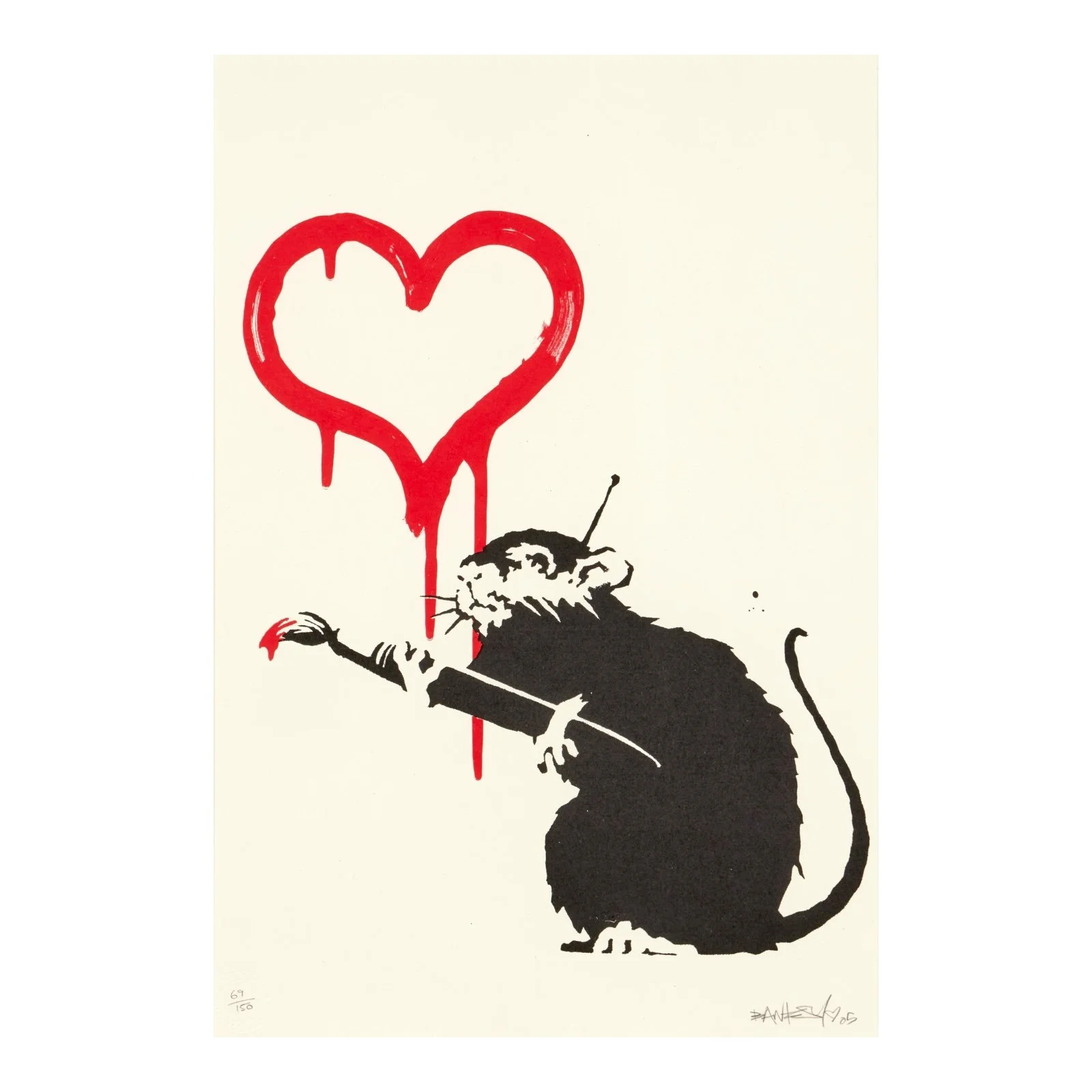
Banksy Love Rat (2005) signed and numbered 69/150 — paper stock, screen print texture, signature placement, and Pest Control documentation must align before authentication and resale positioning can be confirmed.
Introduction — The False Confidence Problem
Banksy limited edition prints are among the most recognizable works in contemporary street art.
The imagery is familiar. The aesthetic is unmistakable. Many collectors assume that if the print “looks right” and includes a certificate, authenticity is secure.
That assumption is where risk begins.
Banksy prints exist within a complex ecosystem of authorized editions, hand-finished variants, unsigned releases, poster copies, unauthorized reproductions, fabricated certificates, and altered numbering. Surface familiarity creates overconfidence. Visual recognition is not verification.
DJR Authentication specializes in professional evaluation of high-value Banksy limited edition prints and related contemporary art assets.
Collectors frequently form conclusions based on image comparison, online listings, or the presence of a certificate. Paper composition, screen print texture, deckled edges, edition format, signature placement, and documentation integrity must align structurally.
In this market, assumptions become expensive quickly.
Where Most Collectors Go Wrong
Assuming a Pest Control certificate automatically confirms authenticity
Treating online image comparison as sufficient verification
Overlooking forged signatures or added “AP” markings
Ignoring subtle differences in paper stock and edge deckling
Misclassifying unsigned prints as signed variants
Accepting third-party documentation without validation
Confusing decorative poster copies with authorized editions
Banksy’s market prominence has attracted sophisticated reproduction activity. Unauthorized works are often designed to withstand casual inspection.
Recognition is not proof.
Why This Category Carries Elevated Risk
Several structural factors increase risk in Banksy limited edition prints.
First, documentation plays a central role in market acceptance. Pest Control certificates must be evaluated in context. Fabricated documentation exists, and inconsistencies can materially affect classification.
Second, paper type and screen print texture require careful examination. Modern reproduction techniques can visually approximate authentic production characteristics.
Third, edition numbering formats and hand-finished variations require contextual understanding. Added markings and altered signatures can distort market tier placement.
Fourth, condition exposure significantly impacts value. Creasing, light damage, handling marks, and improper storage frequently result in grading or auction reclassification.
In this category, a single misidentified item can represent thousands or even tens of thousands of dollars in financial exposure.
Banksy prints combine artistic value, market volatility, and documentation dependency. Authentication is layered, not superficial.
This cannot be confirmed casually.
What Must Be Verified First
Before authenticity or market positioning can be established with confidence, several professional checkpoints must align:
Paper stock characteristics and edge deckling consistency
Screen print texture and ink behavior
Certificate authenticity and documentation alignment
Edition numbering structure and format
Signature placement and structural integration
Exposure to condition reclassification or auction rejection
These variables must align before authenticity or value can be established with confidence.
Isolated indicators are insufficient. Integrated review reduces misclassification risk.
Path 1 — Professional Review
Professional evaluation is appropriate:
Before acquiring high-value Banksy prints
Prior to auction consignment
When documentation authenticity is uncertain
For insurance or estate planning
When edition classification or condition exposure is unclear
Start with a professional evaluation.
Early evaluation prevents costly mistakes and protects your position before a transaction, submission, or sale.
Most clients begin with an Online Fast Opinion to determine authenticity risk and whether further documentation is warranted.
In-person consultations are available by appointment in Charleston, SC.
Documentation should be verified before capital is committed.
Path 2 — Complete Education System
Collectors who want a structured framework before professional review can explore the Banksy Limited Edition Prints Authentication & Ownership System.
The system addresses:
Paper and screen print production fundamentals
Documentation verification strategy
Signature and edition analysis exposure
Condition and grading risk
Ownership documentation and resale positioning
Collectors who want a structured framework before seeking professional review can explore the DJR Expert Guide Library.
Education increases awareness. Professional evaluation protects capital.
Before You Act
Most costly mistakes occur before professional evaluation.
Confidence should follow verification, not precede it.
Early assumptions create irreversible financial exposure in contemporary art markets where documentation drives acceptance.
Professional review preserves options, strengthens resale credibility, and reduces reclassification risk.
With Banksy limited edition prints, the critical decision happens before purchase, submission, or consignment.