Cartier Trinity Gold Ring — Authentication Risk, Hallmark Analysis, and Collector Exposure
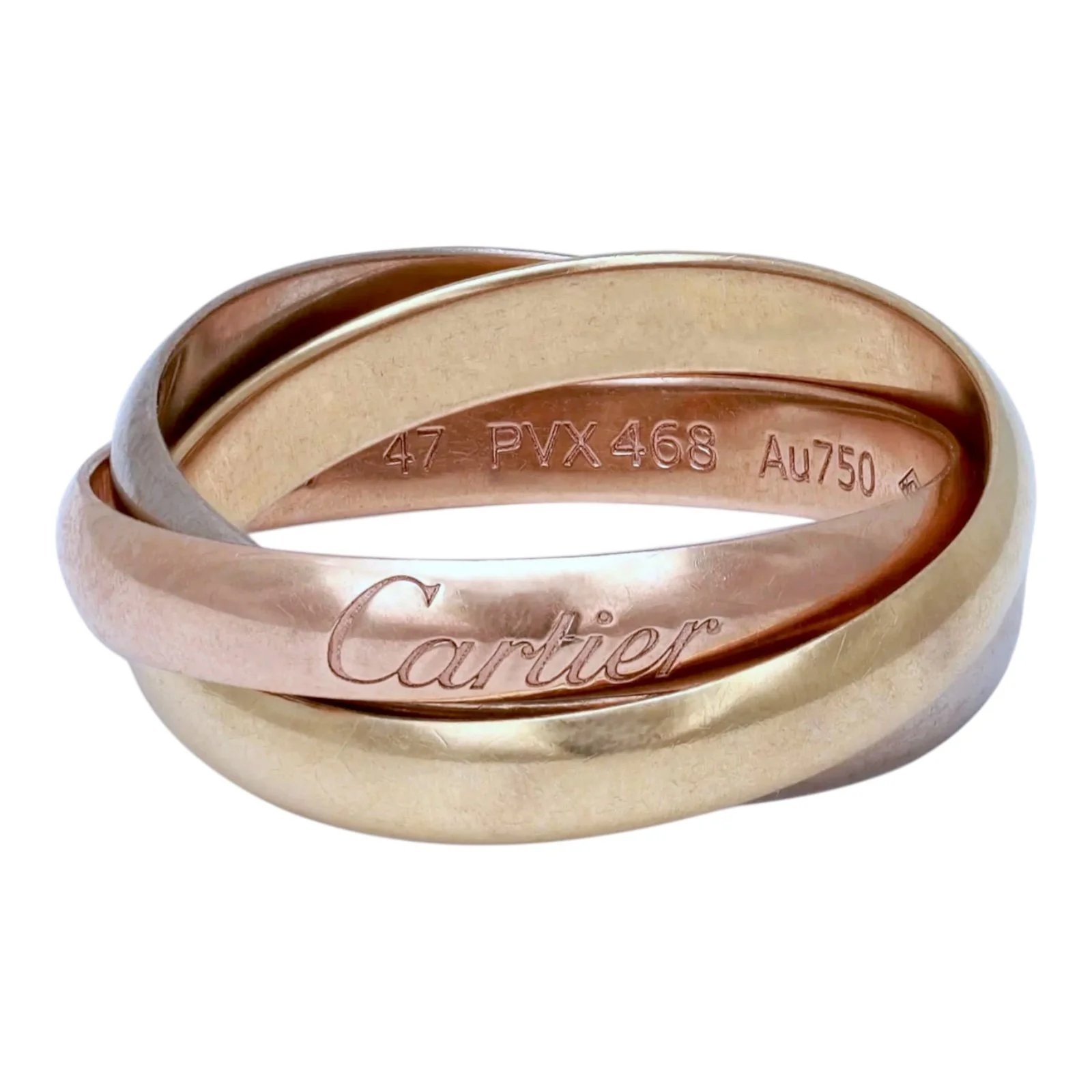
Cartier Trinity gold ring featuring the iconic three-band interlocking design with engraved hallmarks and signature detail.
Introduction — Iconic Design, Frequently Misrepresented
The Cartier Trinity ring is one of the most recognizable jewelry designs in the luxury market. Known for its interlocking three-band construction in yellow, white, and rose gold, it has remained a staple of Cartier craftsmanship for decades.
Its simplicity and popularity have also made it a frequent target for counterfeits, replicas, and modified examples.
Many rings appear convincing at first glance.
The three-band design is correct. The gold tones look appropriate. The engraving is present. The weight may feel substantial.
Confidence builds quickly—often before structural verification takes place.
At DJR Authentication, we evaluate fine jewelry, luxury items, and designer pieces through professional authentication and appraisal services.
The reality is that authentic Cartier Trinity rings must align with precise hallmark characteristics, engraving quality, gold composition, and structural construction consistent with Cartier manufacturing standards.
Surface appearance alone is not sufficient.
Where Collectors Get Exposed
Buyers and collectors frequently encounter risk when evaluating luxury jewelry without structured analysis.
Common exposure points include:
Assuming correct three-band design confirms authenticity
Accepting engraved marks without verifying font and placement
Overlooking inconsistencies in gold tone between bands
Ignoring weight and structural balance differences
Accepting resized or altered rings as original
Missing signs of polishing or gold loss
Relying on appearance rather than construction details
Even experienced buyers can misidentify replicas when evaluation stops at visual inspection.
Authentic Cartier pieces must align with known manufacturing standards and finishing precision.
Why Cartier Trinity Rings Carry Elevated Risk
Several factors increase authentication risk with Cartier Trinity rings.
First, the design is widely recognized and relatively simple in form, making it easier to replicate.
Second, counterfeit examples often include engraved hallmarks that appear convincing but fail under closer examination.
Third, altered rings exist in the market. Resizing, polishing, and component replacement can affect both authenticity indicators and value.
Fourth, authentic Cartier rings follow strict production standards in engraving, gold composition, and construction tolerances.
Finally, differences in weight, balance, and interlocking movement can reveal inconsistencies not immediately visible.
Without evaluating these characteristics together, authenticity cannot be confirmed with confidence.
Critical Diagnostics That Must Align
Before authenticity or collector classification can be established, several structural indicators must align.
Professional evaluation typically examines:
Hallmark engraving font, spacing, and placement
Serial number format and consistency
Three-band construction and interlocking precision
Gold tone variation across yellow, white, and rose bands
Weight, balance, and structural feel
Surface condition and evidence of polishing or resizing
Each of these elements must correspond with known Cartier production characteristics.
An engraved mark alone does not confirm authenticity.
Path 1 — Professional Evaluation
Professional review is often the safest approach when evaluating luxury jewelry.
Evaluation may be appropriate:
Before purchasing a Cartier Trinity ring
Prior to resale or consignment
When authenticity is uncertain
For insurance or estate documentation
When alteration or wear is suspected
Many clients begin with an Online Fast Opinion to determine whether a piece presents authentication risks.
From there, a full appraisal or authentication report can be prepared depending on the intended use.
In-person consultations are available by appointment in Charleston, SC.
Early evaluation protects both financial exposure and long-term resale credibility.
Path 2 — Structured Education System
Collectors and buyers seeking deeper understanding before professional review can explore the Cartier Trinity Gold Ring Authentication & Ownership System available through the DJR Expert Guide Library.
This system examines:
Hallmark engraving and serial number characteristics
Three-band construction and interlocking behavior
Gold composition and structural analysis
Weight and proportional consistency
Condition risks including polishing and resizing
These guides provide structured insight into how authentication decisions are made and what professionals evaluate.
Education strengthens awareness. Professional documentation protects financial outcomes.
Before You Act
Most costly mistakes in luxury jewelry purchases occur before professional evaluation.
A ring that appears correct may still fail structural verification under closer analysis.
Authenticity confidence should follow verification—not precede it.
Buyers who rely on appearance alone risk financial loss, resale complications, and credibility issues.
Understanding construction, hallmark precision, and material characteristics is essential before purchase or resale.
At DJR Authentication, we appraise and authenticate jewelry and collectibles. Reports include full documentation suitable for insurance, estate planning, resale, and more. Visit djrpro.com to learn more. In-person consultations are available by appointment in Charleston, SC.