1933 Goudey Babe Ruth Baseball Card — Authentication Risk, Print Diagnostics, and Collector Exposure
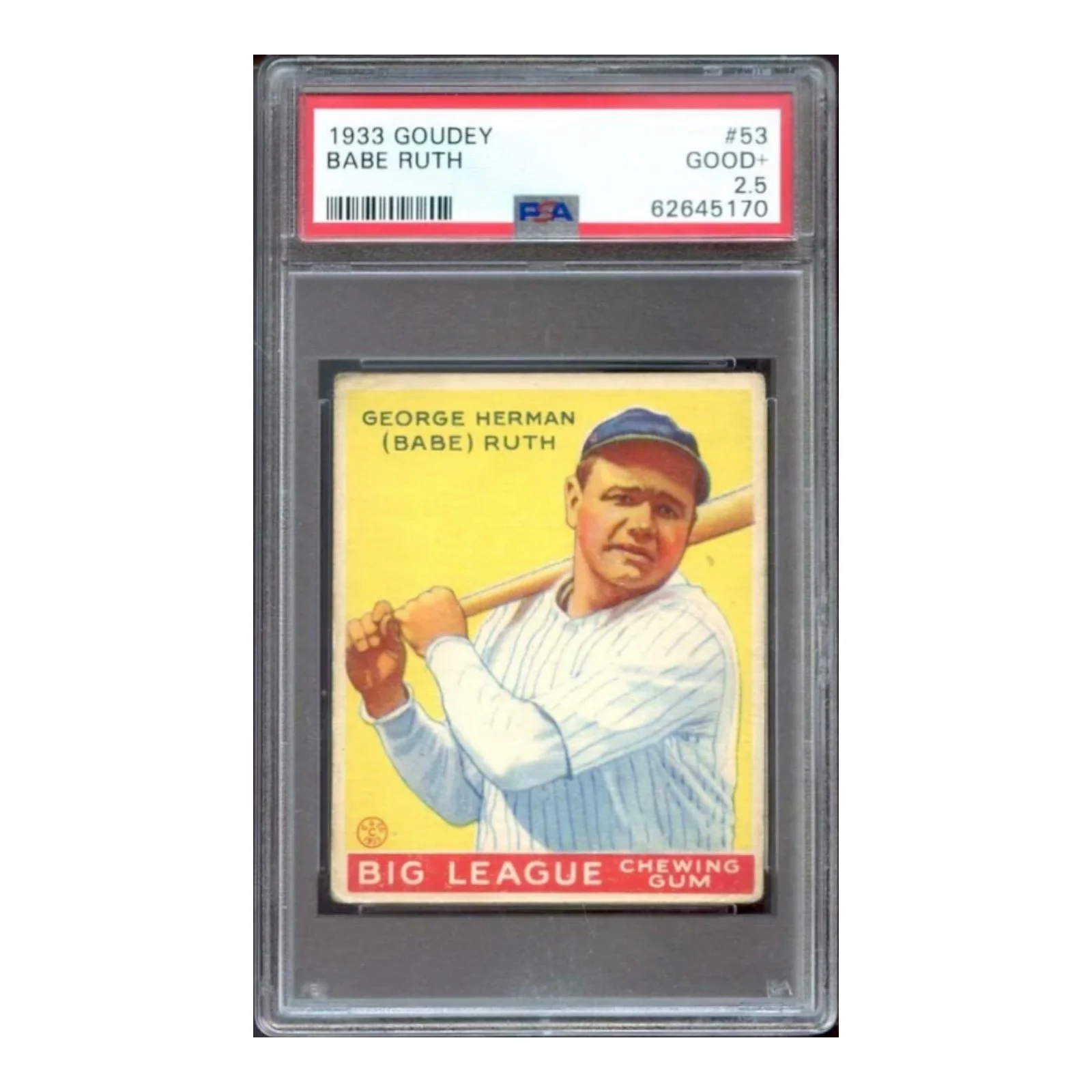
1933 Goudey Babe Ruth #53 vintage baseball card graded PSA 2.5 Good+ featuring the iconic portrait of the legendary slugger.
Introduction — One of the Most Targeted Cards in the Hobby
The 1933 Goudey Babe Ruth baseball card is one of the most iconic and widely recognized cards in the history of sports collecting. Representing one of baseball’s most legendary figures, it remains a cornerstone asset in serious vintage card collections.
Its historical importance and sustained market demand have also made it one of the most frequently reproduced and misrepresented cards in the hobby.
Many examples appear convincing at first glance.
The image is familiar. The colors look correct. The card stock feels appropriate. The edges may even show signs of aging.
Confidence builds quickly—often before structural verification takes place.
At DJR Authentication, we evaluate vintage sports cards through professional authentication and appraisal services.
The reality is that authentic 1933 Goudey Babe Ruth cards must align with specific printing characteristics, paper structure, surface behavior, and production methods consistent with original Goudey manufacturing.
Surface appearance alone is not sufficient.
Where Collectors Get Exposed
Collectors frequently encounter risk when evaluating vintage cards without structured analysis.
Common exposure points include:
Assuming correct artwork confirms authenticity
Accepting reprints or modern copies as originals
Ignoring printing dot patterns and color registration
Overlooking inconsistencies in card stock and thickness
Missing trimmed or altered edges designed to improve appearance
Accepting artificially aged cards as naturally worn
Relying on visual familiarity rather than print diagnostics
Even experienced collectors can misidentify altered or counterfeit cards when evaluation stops at surface-level observation.
Authentic vintage cards must align with specific printing and material characteristics from the original production period.
Why the 1933 Goudey Babe Ruth Card Carries Elevated Risk
Several factors increase authentication risk with this card.
First, Babe Ruth’s legacy and the card’s prominence create strong financial incentive for reproduction and counterfeiting.
Second, numerous reprints, commemorative issues, and modern copies exist. Many replicate the original artwork but fail to match original printing methods.
Third, altered examples appear frequently in the market. Cards may be trimmed, pressed, or recolored to improve visual presentation.
Fourth, original Goudey printing methods produced specific dot patterns, color layering, and surface gloss characteristics that must align.
Finally, the card stock itself—its thickness, fiber structure, and aging behavior—plays a critical role in authentication.
Without evaluating these factors together, authenticity cannot be determined with confidence.
Critical Diagnostics That Must Align
Before authenticity or collector classification can be established, several structural indicators must align.
Professional evaluation typically examines:
Printing dot pattern consistency and structure
Color registration and alignment across layers
Surface gloss and ink behavior
Card stock thickness and fiber composition
Edge structure, aging, and evidence of trimming
Signs of pressing, recoloring, or restoration
Each of these elements must correspond with known production characteristics of 1933 Goudey cards.
Artwork alone does not confirm authenticity.
Path 1 — Professional Evaluation
Professional review is often the safest approach when dealing with high-value vintage cards.
Evaluation may be appropriate:
Before purchasing a Babe Ruth card
Prior to resale or auction consignment
When authenticity is uncertain
For insurance or estate documentation
When alteration or restoration is suspected
Many collectors begin with an Online Fast Opinion to determine whether a card presents authentication risks.
From there, a full appraisal or authentication report can be prepared depending on the intended use.
In-person consultations are available by appointment in Charleston, SC.
Early evaluation protects both financial outcomes and long-term collector credibility.
Path 2 — Structured Education System
Collectors seeking deeper understanding before professional review can explore the 1933 Goudey Babe Ruth Vintage Baseball Card Authentication & Ownership System available through the DJR Expert Guide Library.
This system examines:
Printing dot patterns and color structure
Card stock composition and thickness
Edge fiber characteristics and aging behavior
Surface gloss and ink interaction
Trimming, pressing, and restoration risks
These guides provide structured insight into how authentication decisions are made and what professionals evaluate.
Education strengthens awareness. Professional documentation protects financial outcomes.
Before You Act
Most costly mistakes in vintage card collecting occur before professional evaluation.
A card that appears correct may still fail structural verification under closer analysis.
Authenticity confidence should follow verification—not precede it.
Collectors who rely on surface appearance alone risk financial loss, grading rejection, and resale complications.
Understanding print diagnostics and material characteristics is essential before purchase, grading submission, or sale.
At DJR Authentication, we appraise and authenticate sports cards and collectibles. Reports include full documentation suitable for insurance, estate planning, resale, and more. Visit djrpro.com to learn more. In-person consultations are available by appointment in Charleston, SC.