Vintage Marshall Plexi Amplifiers Authenticity Risk — Reissue Confusion, Replacement Parts, and Five-Figure Financial Exposure
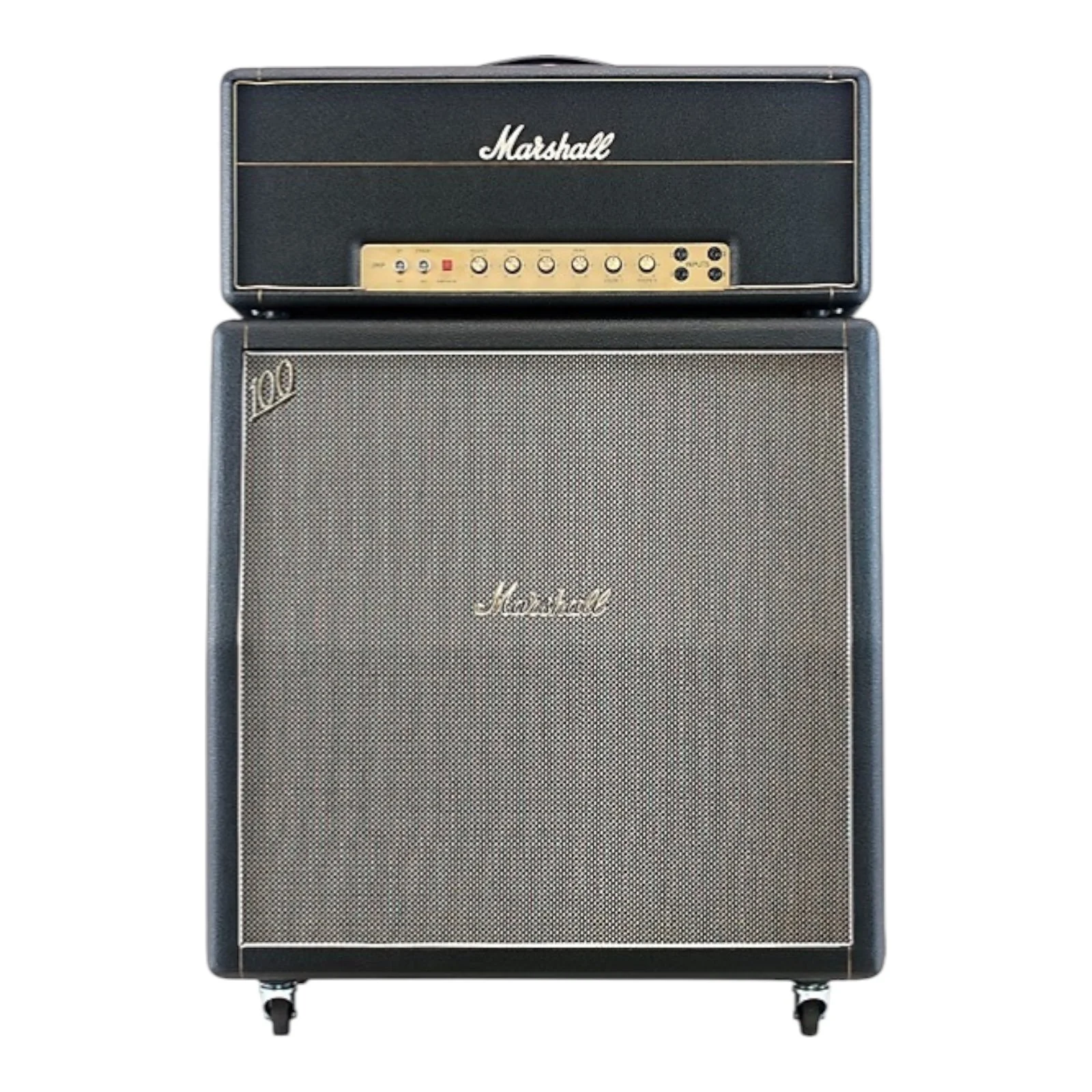
Marshall 1959HW Handwired Plexi Head — a 100-watt all-tube reissue inspired by late-1960s Super Lead amplifiers, featuring gold plexiglass panels, vintage-style script logo, and handwired circuitry for period-inspired tone and response.
Introduction — Familiarity Does Not Equal Authenticity
Few amplifier categories feel as instantly recognizable as Vintage Marshall Plexi Amplifiers. The plexiglass control panel, gold faceplate, and bold logo have become visual shorthand for late-1960s British rock tone. Because the aesthetic is so iconic, many buyers assume authenticity can be confirmed at a glance.
That assumption creates exposure.
Reissues, transitional models, heavily serviced originals, and expertly modified units often appear convincing under casual inspection. Cosmetic familiarity is frequently mistaken for structural verification. Reputation, brand prestige, and historical association do not eliminate classification risk.
DJR Authentication specializes in professional evaluation of high-value vintage guitar amplifiers and related collectible assets.
In this market, assumptions become expensive quickly.
Where Buyers Get Exposed Most Often
Assuming plexiglass panel presence alone confirms period-correct production
Confusing modern reissue faceplate fonts with original late-1960s typography
Overlooking transformer replacement under the assumption that “serviced equals original”
Accepting chassis stamps at face value without considering re-stamping or part substitution
Ignoring component dating inconsistencies between board parts and serial ranges
Treating refinished tolex as cosmetic rather than classification-impacting
Assuming cabinet pairing is original to the head without documentation alignment
Believing artist association or prior ownership eliminates verification risk
Vintage Marshall Plexi Amplifiers are modular by nature. Heads, cabinets, transformers, filter capacitors, and internal boards are frequently swapped, serviced, or upgraded. That modularity creates both tonal appeal and structural ambiguity.
Premium pricing incentives increase misrepresentation risk. When five-figure values are possible, cosmetic similarity is often leveraged to mask internal divergence.
Why This Category Carries Elevated Classification Risk
Vintage Marshall Plexi Amplifiers exist within a narrow historical production window that collectors aggressively pursue. Small production changes, transitional features, and evolving component suppliers create layered complexity.
Multiple variables must align:
Serial sequencing must correlate with transformer manufacturer codes.
Chassis stamp format must align with production period.
Faceplate typography must correspond with era.
Internal board layout must reflect period-correct configuration.
Cabinet construction must match known structural alignment standards of the time.
Service history further complicates classification. Replaced output transformers, updated filter capacitors, rewired boards, and non-factory modifications may improve functionality while materially altering collectibility tier placement.
Auction reclassification risk is real. An amplifier marketed as an original late-1960s unit can be reclassified under scrutiny if internal documentation alignment fails.
In this category, a single misidentified item can represent thousands or even tens of thousands of dollars in financial exposure.
This cannot be confirmed casually.
What Must Align Before Authenticity Can Be Established
Panel material and typography consistency with claimed production period
Logo style proportionality and mounting configuration
Chassis stamp format and placement alignment
Transformer manufacturer coding consistency with era
Internal board layout structural conformity
Evidence of service versus originality in key components
Cabinet construction details and tolex originality indicators
Documentation alignment with serial sequencing and known production patterns
These variables must align before authenticity or value can be established with confidence.
Path 1: Professional Review
Professional evaluation is appropriate:
When considering purchase of a five-figure Vintage Marshall Plexi Amplifier
Before submitting to auction or premium resale platforms
When transformer originality is uncertain
If cabinet and head pairing history is unclear
When documentation does not clearly support classification
Start with a professional evaluation.
Early evaluation prevents costly mistakes and protects your position before a transaction, submission, or sale.
Most clients begin with an Online Fast Opinion to determine authenticity risk and whether further documentation is warranted.
In-person consultations are available by appointment in Charleston, SC.
Path 2: Authentication & Ownership System
For collectors who want structured context before professional review, the Vintage Marshall Plexi Amplifier Authentication & Ownership System provides a comprehensive framework.
Plexiglass panel and logo era differentiation
Transformer code interpretation context
Chassis stamp structure awareness
Service replacement impact analysis
Original vs refinished cabinet classification considerations
Market tier placement and valuation structure
Collectors who want a structured framework before seeking professional review can explore the DJR Expert Guide Library.
Before You Act
Most costly mistakes occur before professional evaluation.
Confidence should follow verification, not precede it.
Once a transaction is completed, leverage shifts. Auction reclassification can reduce tier placement. Misidentified originality can materially alter value. Documentation gaps may become irreversible under scrutiny.
The most important decision happens before the transaction.