The 1964 WWWF Teaneck Armory Wrestling Program — When Early Wrestling Ephemera Creates False Certainty
The Situation
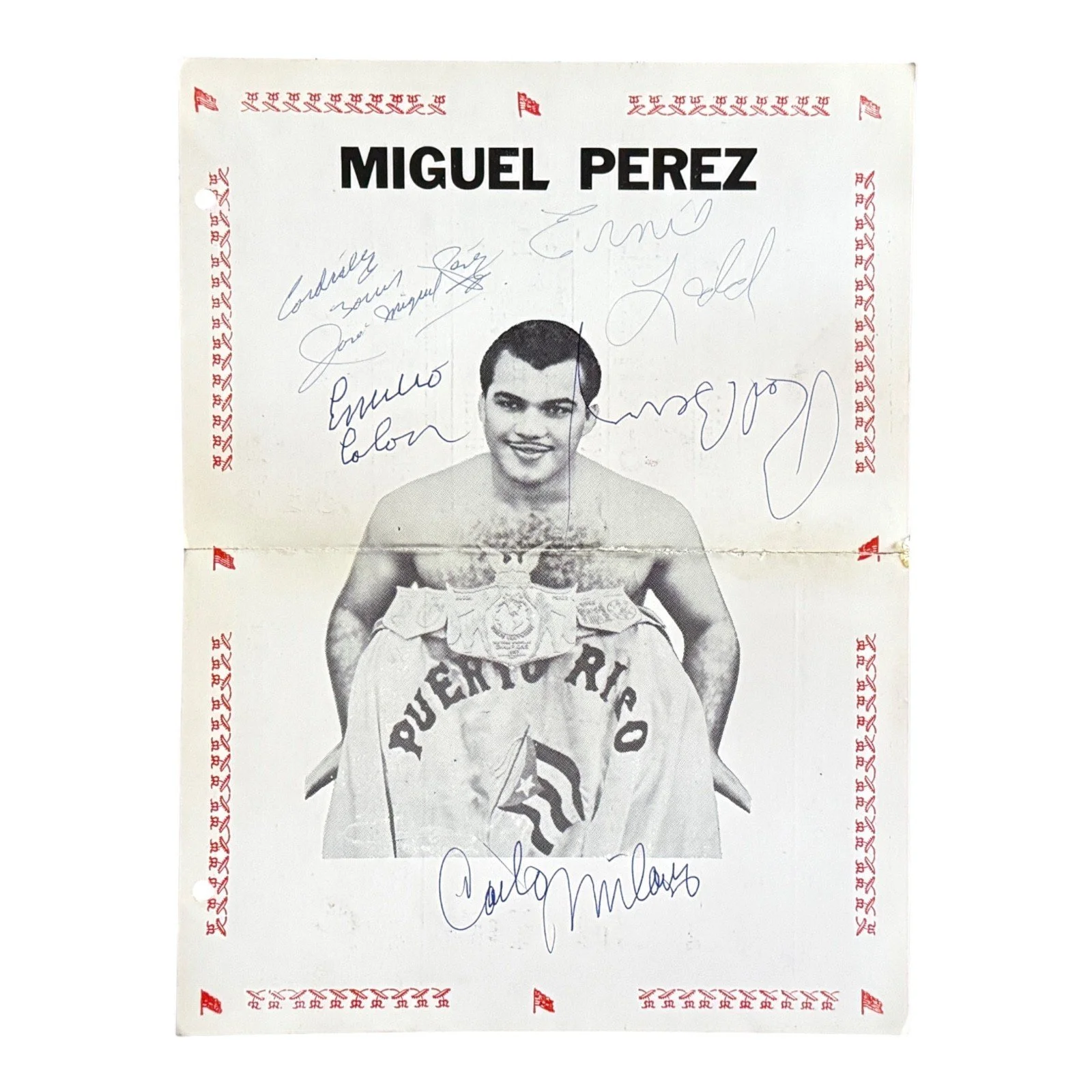
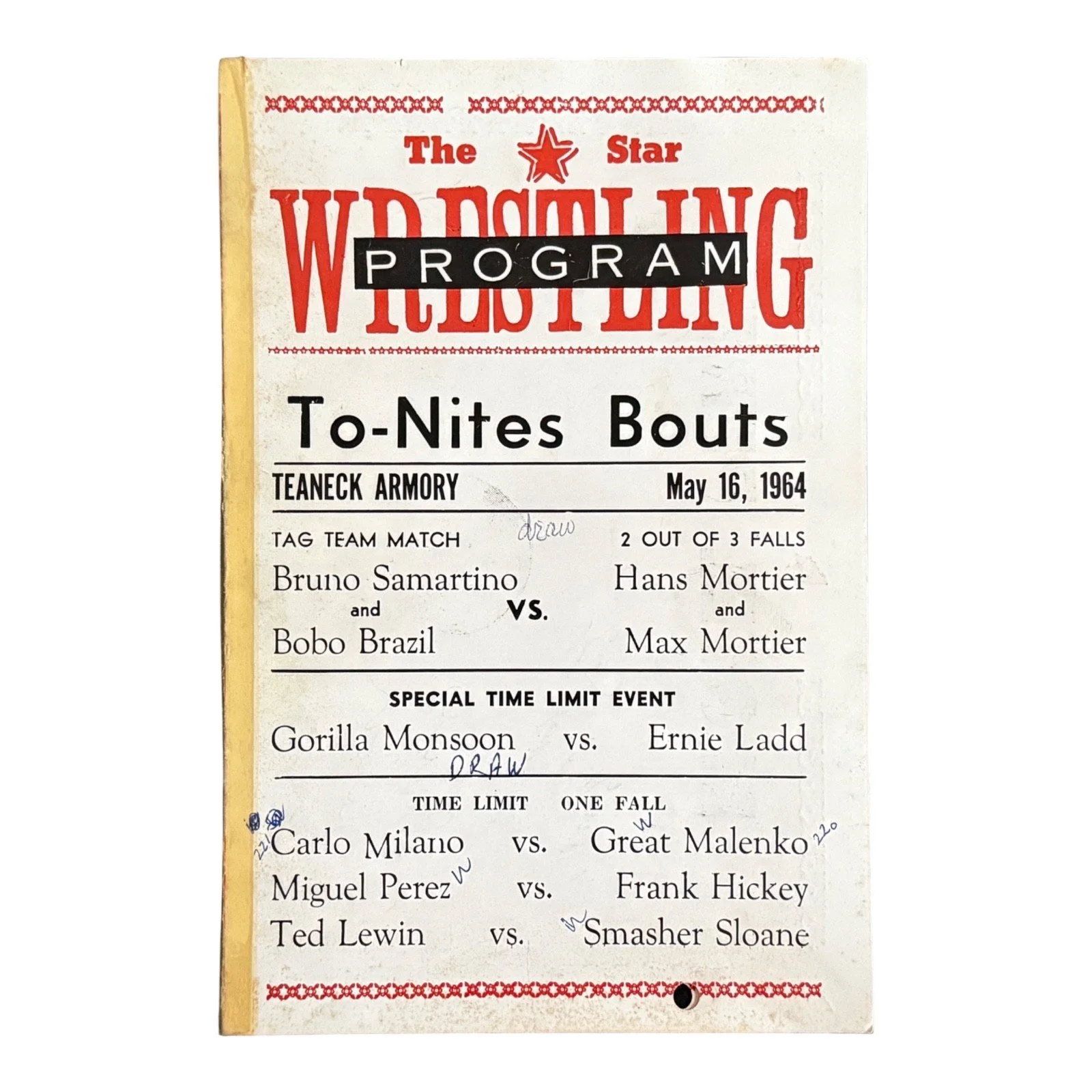
An original early-1960s World Wide Wrestling Federation program surfaces from the May 16, 1964 Teaneck Armory event, representing the formative territorial era that preceded the modern WWF and WWE. The program measures approximately 9 × 6 inches and features a strong card headlined by Bruno Sammartino and Bobo Brazil, with additional appearances by Gorilla Monsoon, Ernie Ladd, Miguel Perez, and others. This example is further enhanced by multiple period signatures executed in blue ink, consistent with mid-1960s autograph styles, and shows expected age toning, fold wear, and handling consistent with in-venue use.
Where Early Decisions Go Wrong
At this stage, many collectors equate the presence of multiple signatures with increased legitimacy and reduced risk. Others assume that recognizable names automatically confirm period authenticity or that the accumulation of autographs strengthens the item as a whole. The most common mistake is treating quantity as confirmation—without considering how one uncertain signature can destabilize the entire piece.
Why This Category Carries Unique Risk
Territorial-era wrestling programs occupy a uniquely vulnerable category. Programs were inexpensive, heavily handled, and frequently signed informally before or after events. Documentation was minimal, autograph habits varied widely, and signatures were often added at different times. In multi-signed examples, overall confidence is governed by the weakest element, not the strongest. Once assumptions harden around aggregate appeal, options narrow quickly.
What Must Be Determined First
Before any action, professionals pause to consider:
Whether all signatures reflect the same period and context
Whether placement, ink, and execution suggest consistent signing circumstances
Whether one high-risk or later signature compromises the group
Whether professional review would materially change confidence
Whether restraint preserves credibility better than immediate positioning
These questions must be identified before conclusions are drawn.
The Decision Fork
Path 1 — Professional Review
When early wrestling ephemera includes multiple signatures and historically significant figures, a first-stage professional review is the safest place to begin. Most clients start with an Online Fast Opinion—a first-stage professional review—to determine whether further appraisal or authentication is warranted, and whether escalation adds clarity or unnecessary exposure. This approach separates historical appeal from evidentiary strength before irreversible decisions are made.
Path 2 — Preliminary Self-Education
For those seeking context before engaging professional services, DJR Real vs. Fake™: Signed Memorabilia With Multiple Signatures — Strength or Risk? provides a focused framework for understanding why aggregate signature density often creates false confidence. The guide addresses how one weak or high-risk signature can undermine an entire item and why restraint is frequently the correct first decision. It is designed to reduce early decision risk, not to replace professional review or resolve authentication outcomes.
Before You Act
In early wrestling and sports ephemera categories, confidence often arrives before clarity. The most costly mistakes tend to occur when historical importance and signature quantity are mistaken for evidentiary certainty. Disciplined restraint remains the most defensible first decision.