Salvador Dalí Signed Lithographs Authentication Guide — Costly Misidentification and Posthumous Print Risk
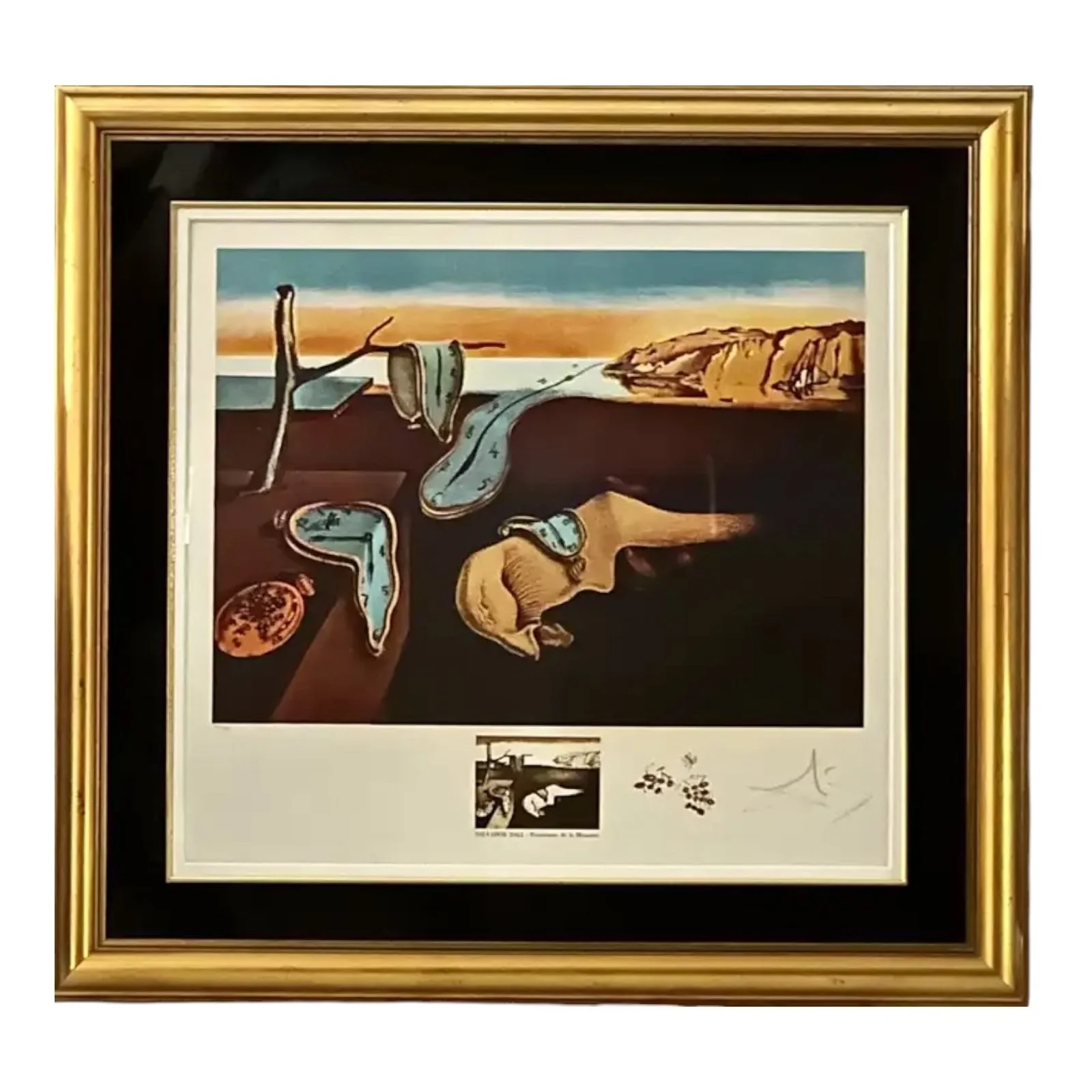
Framed Salvador Dalí signed lithograph — signature authenticity, edition classification, and print status must be verified before valuation or resale.
Introduction — The False Confidence Problem
Salvador Dalí signed lithographs are widely available in galleries, auctions, estate sales, and online marketplaces. The imagery is unmistakable. The signature appears dramatic and fluid. Pencil numbering in the lower margin suggests legitimacy. To many collectors, these surface characteristics create immediate confidence.
That confidence is often misplaced.
The Dalí print market is layered with lifetime-signed works, authorized editions, estate releases, restrikes, unsigned impressions, posthumous prints, and outright fabrications. Paper aging can be simulated. Pencil signatures can be replicated. Edition markings can be misleading. Visual familiarity frequently leads to premature conclusions.
DJR Authentication specializes in professional evaluation of high-value Salvador Dalí signed lithographs and related collectible assets.
In this segment of the art market, appearance alone is rarely decisive. The structure of a signature, the characteristics of the paper, the edition format, and the print technique must align. Many collectors form conclusions before these variables are examined in context.
In this market, assumptions become expensive quickly.
Where Most Collectors Go Wrong
Assuming a visible pencil signature confirms lifetime execution
Treating edition numbering as automatic proof of authenticity
Believing aging or toning guarantees period paper
Relying on gallery framing or certificates without independent review
Confusing estate prints with lifetime-signed lithographs
Ignoring subtle inconsistencies in print technique
Assuming auction appearance equals verified authentication
Dalí’s prolific output and complex publishing history create structural confusion. Multiple publishers produced editions during and after his lifetime. Some editions were signed in blank. Others were posthumous. Some were later marketed as lifetime works without sufficient documentation.
The result is a category where misclassification is common and confidence is frequently built on incomplete information.
Why This Category Carries Elevated Risk
Several factors elevate risk within Salvador Dalí signed lithographs.
First, Dalí’s signature itself varies in structure, pressure, and execution across periods. A convincing reproduction can resemble the surface look of an authentic signature while failing deeper structural alignment.
Second, paper stock and plate characteristics matter. Differences in fiber composition, watermark presence, plate mark behavior, and print technique can materially affect classification.
Third, numbering formats and “EA” or artist’s proof markings are frequently misunderstood. Not all edition markings carry equal weight, and some have been replicated in later printings.
Fourth, auction houses and authentication reviewers scrutinize Dalí works closely. Works that appear acceptable in private transactions may fail professional review or be reclassified in ways that materially affect value.
In this category, a single misidentified item can represent thousands or even tens of thousands of dollars in financial exposure.
The layered interplay between signature analysis, print technique, edition classification, and provenance documentation creates a complexity that exceeds casual inspection. Even experienced collectors can misinterpret one of these variables in isolation.
This cannot be confirmed casually.
What Must Be Verified First
Before authenticity or value can be established with confidence, several professional checkpoints must align:
Pencil signature structure consistent with known lifetime characteristics
Paper stock and fiber behavior appropriate to the claimed period
Plate mark presence and print technique alignment
Edition numbering format and statement accuracy
Evidence of posthumous production or estate release
Exposure to authentication rejection or auction reclassification
These variables must align before authenticity or value can be established with confidence.
A single inconsistency may not immediately invalidate a work, but multiple misalignments significantly increase risk. Proper evaluation requires contextual comparison and disciplined analysis.
Path 1 — Professional Review
Professional evaluation is appropriate in several situations:
Prior to purchase at meaningful price levels
Before consigning to auction
When selling through gallery or private channels
For insurance or estate documentation
When signature or edition status is uncertain
Start with a professional evaluation.
Early evaluation prevents costly mistakes and protects your position before a transaction, submission, or sale.
Most clients begin with an Online Fast Opinion to determine authenticity risk and whether further documentation is warranted.
In-person consultations are available by appointment in Charleston, SC.
Structured review preserves optionality and protects credibility in high-value art transactions.
Path 2 — Complete Education System
For collectors who want structured context before formal review, the Salvador Dalí Signed Lithograph Authentication & Ownership System provides a comprehensive framework.
The system addresses:
Signature structure and execution variability
Paper stock and print technique fundamentals
Edition numbering and proof designation risk
Authentication decision sequencing
Ownership documentation and resale positioning
Collectors who want a structured framework before seeking professional review can explore the DJR Expert Guide Library.
Education strengthens awareness, but professional review protects outcomes in high-exposure art markets.
Before You Act
Most costly mistakes occur before professional evaluation.
Confidence should follow verification, not precede it.
Early assumptions can create irreversible financial exposure, particularly when purchasing, consigning, or insuring signed Dalí works.
Professional review preserves resale positioning, protects credibility with auction houses, and reduces the risk of post-purchase reclassification or authentication failure.
With Salvador Dalí signed lithographs, the critical decision happens before a transaction or submission.