Pokémon 1st Edition Base Set Charizard — Counterfeit Risk, Reprint Exposure, and Authentication Reality
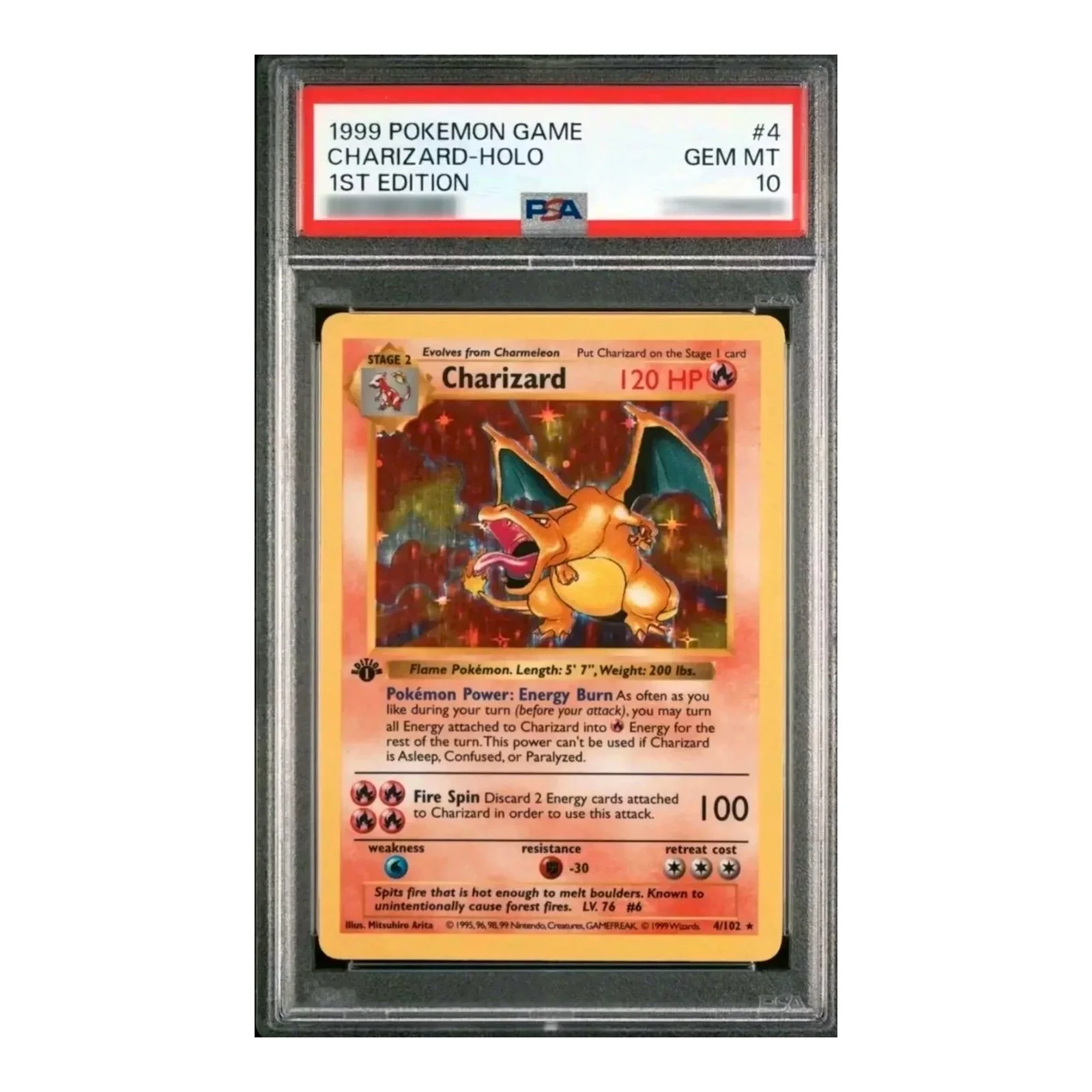
1999 Pokémon Base Set 1st Edition Shadowless Holo Charizard #4 graded PSA GEM MINT 10, one of the most iconic and valuable trading cards in the Pokémon TCG hobby.
Introduction — One of the Most Counterfeited Modern Trading Cards
The Pokémon 1st Edition Base Set Charizard card is one of the most recognizable and valuable trading cards in the modern collectibles market. Since the late 1990s, it has become a centerpiece for collectors of Pokémon cards and one of the most widely searched items in the trading card hobby.
Because of that popularity, many assume identification is straightforward.
It is not.
A card may appear correct at first glance. The holographic foil reflects light. The artwork looks familiar. The card stock feels substantial. Confidence builds quickly — often before structural verification occurs.
DJR Authentication specializes in professional evaluation of high-value Pokémon trading cards and related collectible assets.
The reality is that holographic pattern behavior, stamp fonts, card stock structure, print registration, and surface gloss must align across multiple manufacturing characteristics. Many cards presented as authentic examples are actually modern reprints, counterfeit copies, or altered originals.
In this market, assumptions become expensive quickly.
Where Collectors Get Exposed
Assuming holographic shine confirms authenticity
Ignoring subtle differences in the 1st Edition stamp font
Overlooking card stock thickness and internal fiber structure
Accepting sharp edges without trimming verification
Missing surface pressing or restoration
Confusing reprints with authentic Base Set production
Relying on online listings without structural inspection
Modern counterfeit Pokémon cards can replicate the visual appearance of authentic examples surprisingly well.
Surface appearance alone cannot confirm authenticity.
Why This Card Carries Elevated Risk
Several structural factors increase authentication risk with Pokémon 1st Edition Base Set Charizard cards.
First, the card has enormous demand and market visibility. High-grade examples regularly sell for significant prices, which incentivizes counterfeit production.
Second, numerous reprints and modern copies exist. Over time, printing technology has improved, allowing counterfeit cards to appear visually convincing.
Third, alteration and restoration can occur. Trimming, pressing, and surface repairs may improve visual appearance while masking structural issues.
Fourth, grading companies examine these cards closely. Cards that appear correct in casual inspection may fail authentication or receive altered designations during professional review.
In this category, even small structural inconsistencies can represent significant financial exposure.
This cannot be confirmed casually.
Critical Diagnostics That Must Align
Before authenticity or value can be established with confidence, several structural checkpoints must align:
Holographic foil pattern consistent with Base Set production
1st Edition stamp font shape and placement
Card stock thickness and internal paper fiber structure
Print registration and color saturation alignment
Surface gloss behavior consistent with vintage Pokémon printing
Evidence of trimming, rebacking, or restoration
These variables must align before authenticity or grading confidence can be established.
Isolated features do not confirm authenticity. Professional evaluation considers the card as an integrated printed object.
Path 1 — Professional Evaluation
Professional evaluation is appropriate:
Before purchasing high-value Pokémon cards
Prior to grading submission
When authenticity is uncertain
For insurance or resale documentation
When a card’s condition or originality is unclear
Start with a professional evaluation.
Many collectors begin with an Online Fast Opinion to determine authenticity risk before pursuing full documentation.
In-person consultations are available by appointment in Charleston, SC.
Early review protects financial exposure and long-term resale credibility.
Path 2 — Structured Education System
For collectors who want deeper context before professional review, the Pokémon 1st Edition Base Set Charizard Authentication & Ownership System provides a comprehensive framework.
The system addresses:
Holographic pattern diagnostics
1st Edition stamp verification
Card stock and edge fiber analysis
Print registration and surface gloss evaluation
Trimming, rebacking, and restoration exposure
Collectors who want structured context before seeking professional review can explore the DJR Expert Guide Library.
Education strengthens awareness. Professional evaluation protects financial outcomes.
Before You Act
Most costly mistakes occur before professional evaluation.
Confidence should follow verification, not precede it.
Early assumptions about authenticity or condition can create irreversible financial exposure in high-value trading card markets.
Professional review protects grading outcomes, resale credibility, and collector positioning.
With Pokémon 1st Edition Base Set Charizard cards, the most important decision happens before a purchase, submission, or sale.