1964 GI Joe Action Figures — Early Production Variants, Replacement Parts, and Authentication Risk
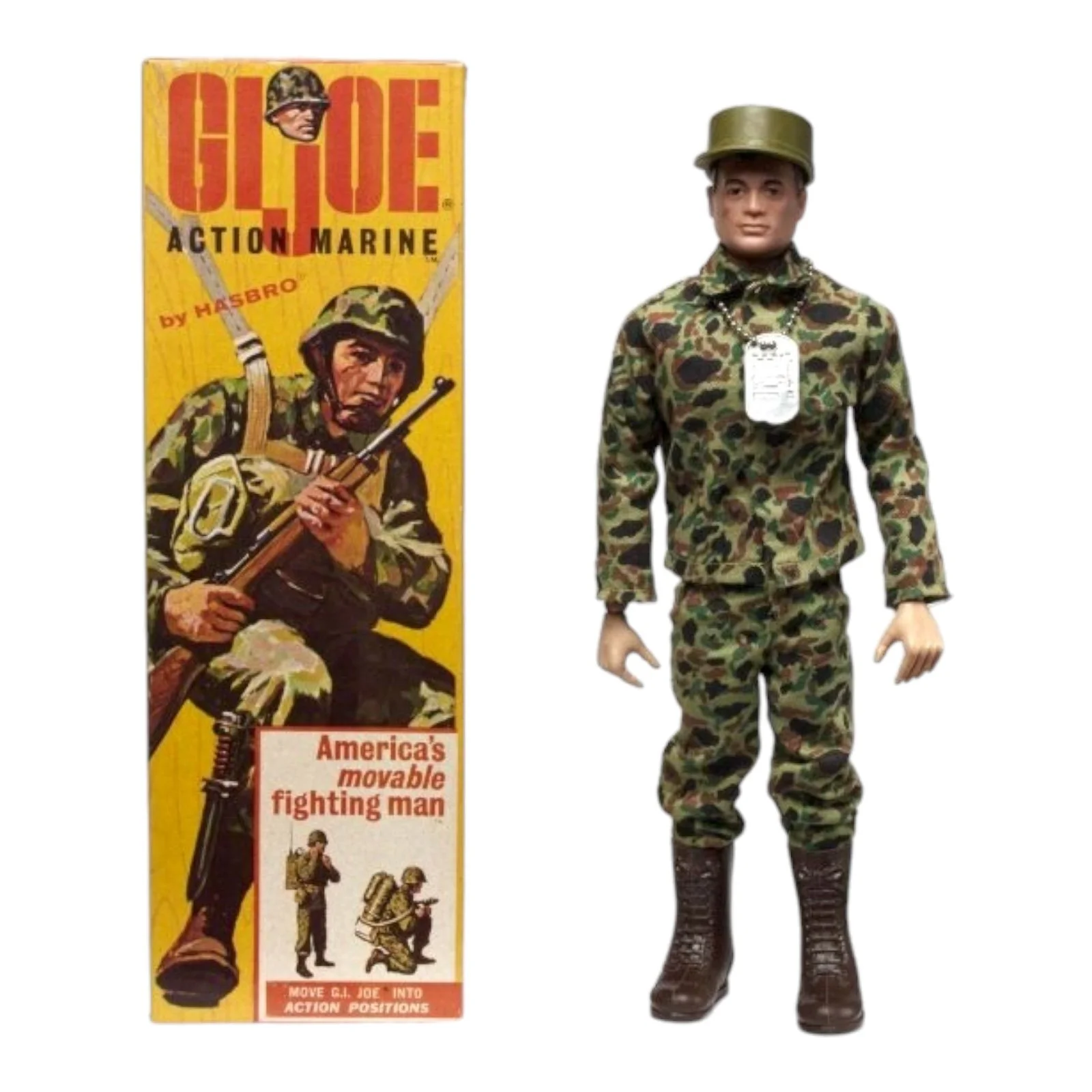
1964 GI Joe Action Marine figure by Hasbro shown with original box artwork, representing the first generation of 12-inch GI Joe action figures introduced in 1964.
Introduction — The Figure That Created the Action Figure Market
The 1964 GI Joe action figure introduced an entirely new category of collectible toys. Produced by Hasbro, the original 12-inch GI Joe figures were marketed as “action figures” rather than dolls and quickly became one of the most influential toy lines ever produced.
Because of that historic status, many collectors assume identifying an original 1964 example is straightforward.
It is not.
A figure may appear correct at first glance. The uniform looks vintage. The body articulation functions properly. The accessories appear period appropriate. Confidence builds quickly — often before structural verification occurs.
DJR Authentication specializes in professional evaluation of vintage toys, action figures, and related collectible assets.
The reality is that body mold markings, head sculpt variations, plastic composition, joint construction, uniform fabrics, and accessory manufacturing details must align across multiple components. Many figures presented as original examples contain reproduction accessories, replacement limbs, later uniforms, or modified parts.
In this market, assumptions become expensive quickly.
Where Collectors Get Exposed
Assuming any 12-inch GI Joe figure from the 1960s is an original 1964 example
Ignoring mold markings on torso, limbs, and head sculpts
Overlooking reproduction accessories and uniforms
Accepting replacement limbs without structural verification
Missing differences in early production variants
Confusing later Hasbro releases with original figures
Relying on surface appearance rather than component analysis
Vintage toys are modular collectibles. Parts can be swapped, replaced, or reproduced while preserving the appearance of originality.
Surface appearance alone cannot confirm authenticity.
Why 1964 GI Joe Figures Carry Elevated Risk
Several structural factors increase authentication risk in early GI Joe figures.
First, production variants exist. Early figures display differences in head sculpt, body mold markings, and construction details.
Second, accessories and uniforms are frequently reproduced. Replacement items can look convincing but lack correct stitching patterns or materials.
Third, parts swapping is common. A figure may contain original components combined with later replacements or reproduction parts.
Fourth, condition and originality significantly affect value. Figures with mixed components or reproduction accessories often carry dramatically different market positioning than complete original examples.
Because of these variables, accurate identification requires examining the figure as a complete assembled object rather than evaluating individual pieces in isolation.
This cannot be confirmed casually.
Critical Diagnostics That Must Align
Before authenticity or collector classification can be established with confidence, several structural checkpoints must align:
Body mold markings and torso stamp consistency
Head sculpt characteristics and production variants
Plastic composition and joint construction behavior
Uniform fabric type and stitching patterns
Accessory construction and material consistency
Evidence of replacement limbs or reproduction parts
These variables must align before authenticity or value can be established with confidence.
Isolated original components do not confirm a fully original figure.
Path 1 — Professional Evaluation
Professional evaluation is appropriate:
Before purchasing high-value vintage figures
Prior to resale or auction listing
When determining originality of accessories
For insurance or estate documentation
When component replacement is suspected
Start with a professional evaluation.
Many collectors begin with an Online Fast Opinion to determine authenticity risk and whether additional documentation is warranted.
In-person consultations are available by appointment in Charleston, SC.
Early evaluation protects financial exposure and resale credibility.
Path 2 — Structured Education System
Collectors who want deeper context before professional review can explore the 1964 GI Joe Action Figure Authentication & Ownership System.
This system addresses:
Body mold markings and production variants
Head sculpt identification
Plastic composition and joint construction
Uniform fabrics and accessory manufacturing
Replacement parts and reproduction detection
Collectors seeking structured context before professional review can explore the DJR Expert Guide Library.
Education strengthens awareness. Professional evaluation protects financial outcomes.
Before You Act
Most costly mistakes occur before professional evaluation.
Confidence should follow verification, not precede it.
Early assumptions about originality or completeness can create irreversible financial exposure in vintage toy markets.
Professional review protects resale credibility, collector positioning, and ownership documentation.
With 1964 GI Joe action figures, the most important decision happens before purchase, restoration, or sale.