Hot Wheels Redline Cars — Spectraflame Repaint Risk, Restoration Exposure, and Collector Rejection
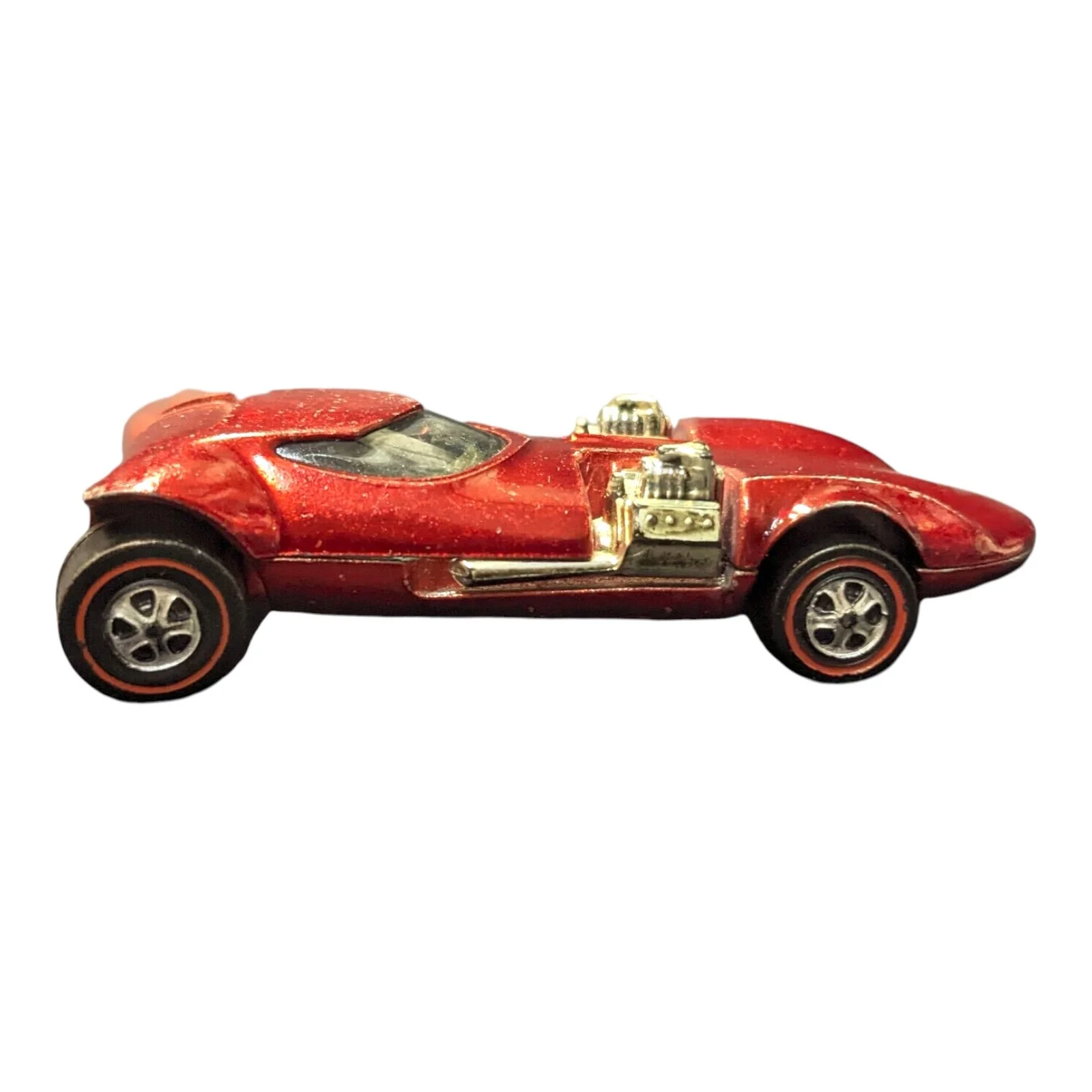
1969 Hot Wheels Redline Twin Mill in Spectraflame Red with U.S. base — paint originality, wheel construction, axle integrity, and base stamp accuracy determine collector-grade classification and auction viability.
Introduction — The False Confidence Problem
Hot Wheels Redline cars from 1968–1977 are among the most recognizable die-cast collectibles ever produced. The Spectraflame paint gleams. The red-striped wheels are iconic. The base stamp appears definitive. For many collectors, those surface indicators create instant confidence.
That confidence can be costly.
Redlines have been restored, repainted, re-wheeled, and modified for decades. Reproductions and component swaps exist alongside genuine originals. Hong Kong and U.S. base variations introduce additional complexity. A car that appears vibrant and clean may carry restoration exposure that materially affects classification and value.
DJR Authentication specializes in professional evaluation of high-value Hot Wheels Redline cars and related vintage die-cast assets.
Wheel construction, axle types, paint integrity, base stamps, and casting variations must align before authenticity and originality can be established with confidence.
In this market, assumptions become expensive quickly.
Where Most Collectors Go Wrong
Assuming bright Spectraflame paint confirms originality
Treating clean wheels as proof of factory condition
Overlooking axle replacement or bearing inconsistency
Ignoring Hong Kong versus U.S. base distinctions
Accepting restored cars as “near mint originals”
Relying on seller descriptions without structural verification
Believing auction listing equals authentication certainty
Redline cars are small objects with large financial implications. Restoration can dramatically improve appearance while reducing collector-grade authenticity. Subtle component differences may not be immediately visible.
Visual appeal is not authentication.
Why This Category Carries Elevated Risk
Several structural factors elevate risk in the Redline market.
First, Spectraflame paint is highly susceptible to fading and damage. Repaints can appear convincing, especially under bright lighting or photography.
Second, wheels and axles are replaceable. A car may contain authentic-era components assembled later, creating classification ambiguity.
Third, base stamp variations between Hong Kong and U.S. production influence desirability and value. Misidentification can materially affect tier placement.
Fourth, restorations are common. Even professionally restored cars must be distinguished from untouched originals.
Fifth, serious collectors and auction houses scrutinize originality carefully. Cars that appear high-grade privately may be reclassified during formal review.
In this category, a single misidentified item can represent thousands or even tens of thousands of dollars in financial exposure.
The interaction between paint integrity, wheel construction, axle type, casting variation, and base stamp origin creates layered complexity. Casual inspection is insufficient.
This cannot be confirmed casually.
What Must Be Verified First
Before authenticity or value can be established with confidence, several checkpoints must align:
Spectraflame paint behavior consistent with original factory finish
Wheel construction and redline stripe integrity
Axle type and bearing consistency
Base stamp origin and casting variation alignment
Evidence of restoration, repaint, or component swap
Exposure to auction reclassification or collector rejection
These variables must align before authenticity or value can be established with confidence.
Isolated originality does not equal full collector-grade status. Structured evaluation considers the car as an integrated piece.
Path 1 — Professional Review
Professional evaluation is appropriate:
Before purchasing high-value Redlines
Prior to auction consignment
When marketing as “all original”
For insurance or estate documentation
When restoration history is unclear
Start with a professional evaluation.
Early evaluation prevents costly mistakes and protects your position before a transaction, submission, or sale.
Most clients begin with an Online Fast Opinion to determine authenticity risk and whether further documentation is warranted.
In-person consultations are available by appointment in Charleston, SC.
Early review protects liquidity in a market where originality drives pricing tiers.
Path 2 — Complete Education System
Collectors who want structured context before professional review can explore the Hot Wheels Redline Authentication & Ownership System.
The system addresses:
Wheel construction and axle analysis fundamentals
Spectraflame repaint and restoration exposure
Base stamp and casting variation considerations
Auction and grading risk management
Ownership documentation and resale strategy
Collectors who want a structured framework before seeking professional review can explore the DJR Expert Guide Library.
Education strengthens awareness. Professional evaluation protects financial outcomes.
Before You Act
Most costly mistakes occur before professional evaluation.
Confidence should follow verification, not precede it.
Early assumptions create irreversible financial exposure, particularly in high-grade Redline markets where originality defines value.
Professional review preserves credibility, protects auction positioning, and reduces reclassification risk.
With Hot Wheels Redline cars, the critical decision happens before purchase, listing, or consignment.