How Professionals Evaluate Sculptural Works With Complex Form and Finish
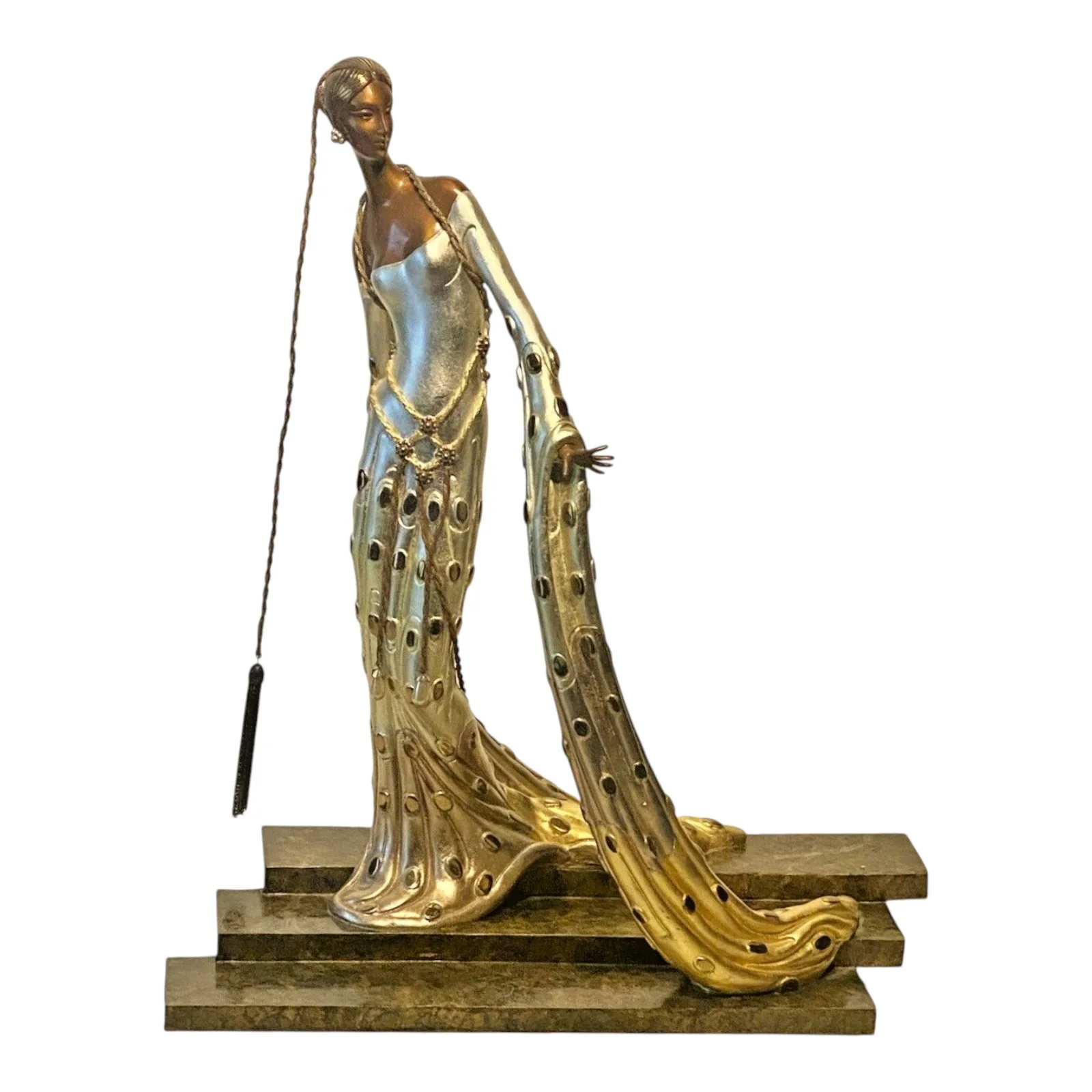
Erte Romain de Tirtoff Melisande Bronze Figurative Sculpture
Sculptural objects with flowing forms, layered surfaces, and mixed finishes present a distinct set of evaluation considerations for professional appraisers and authenticators. Rather than approaching these works as purely decorative objects, experts assess them as constructed artifacts where material behavior, fabrication choices, and surface condition all carry important information.
Materials and Structural Composition
Evaluation begins with close observation of the materials used and how they interact. In sculptural works of this type, professionals look at the density, casting characteristics, and surface response of the metal itself, as well as how the figure is supported or balanced. Attention is paid to transitions between elements, such as where limbs, garments, or extended forms meet the core structure, since these areas often reveal how the piece was engineered and assembled.
Construction and Fabrication Indicators
Professionals assess whether the sculpture shows signs of single casting, multi-part casting, or assembled components. Seams, joins, and subtle surface variations can indicate how the work was produced and finished. These observations are not conclusions, but reference points that help place the object within broader sculptural production norms. The presence of integrated bases or layered platforms is also reviewed for how they relate structurally and visually to the figure above.
Surface Finish and Condition Assessment
Surface finish is examined for consistency, depth, and interaction with light. Appraisers note whether the surface treatment appears uniform across high and low points or whether natural handling and environmental exposure have created differential wear. Condition assessment includes looking for abrasions, oxidation patterns, residue buildup, or surface interruptions that may affect how the sculpture presents today, without assigning cause or significance.
Wear Patterns and Handling Evidence
Wear patterns are evaluated in relation to the sculpture’s form. Protruding elements, extended edges, and narrow contact points often experience different handling stress than recessed or protected areas. Professionals consider whether wear appears gradual and coherent across the piece or concentrated in areas consistent with movement, cleaning, or display practices over time.
Markings, Inscriptions, and Identifiers
Any markings, inscriptions, or foundry-style identifiers are examined for placement, execution, and integration into the surface. Rather than attributing meaning in isolation, experts assess how these elements relate physically to the surrounding material and finish. Consistency between markings and overall surface treatment is a key observation point, not a determination.
Broader Category Context
Finally, professionals place the sculpture within a wider category context, considering how similar works are typically constructed, finished, and presented. This contextual framing helps avoid assumptions based on appearance alone and reinforces an evidence-based approach rooted in experience across comparable objects.
Professional evaluation prioritizes observation, documentation, and restraint. The goal is to understand how an object was made, how it has aged, and how its physical characteristics align, without speculation or premature conclusions.