Atari 2600 Sealed Consoles — Packaging Construction, Factory Seals, and Authentication Risk
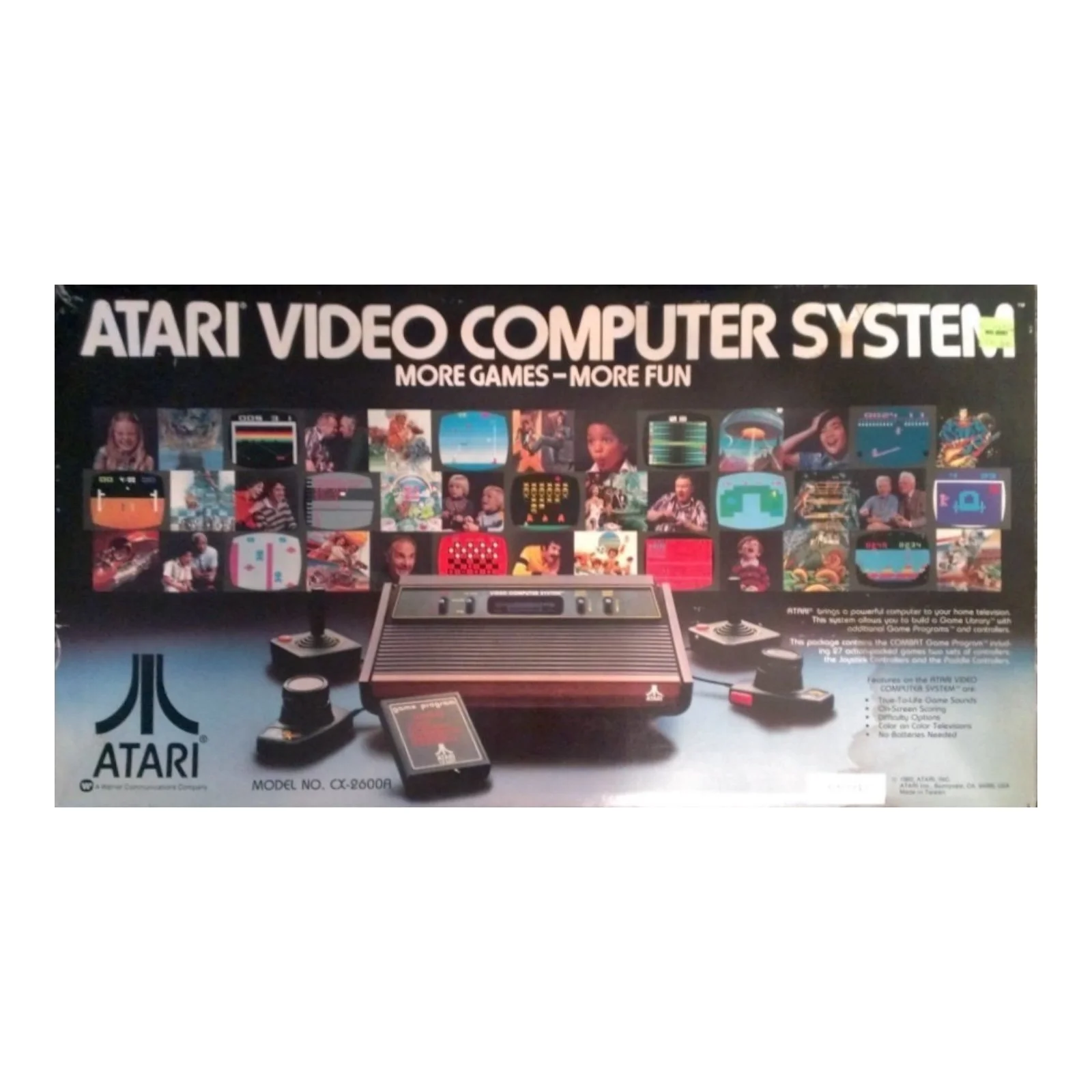
Atari 2600 Video Computer System retail box featuring console, controllers, and early game imagery used in original system marketing.
Introduction — One of the Most Important Video Game Systems Ever Released
The Atari 2600 helped define the early home video game industry. Released in the late 1970s, the console introduced millions of households to cartridge-based gaming and remains one of the most historically significant gaming systems ever produced.
Today, sealed Atari 2600 consoles are highly sought-after collectibles.
Because the packaging design is familiar and widely reproduced online, many collectors assume identifying an original factory-sealed example is straightforward.
It is not.
A box may appear convincing at first glance. The artwork looks correct. The packaging appears aged. The seal tape looks intact. Confidence builds quickly — often before structural verification occurs.
DJR Authentication evaluates sealed video game consoles and collectible electronics through professional authentication and appraisal services.
The reality is that factory seals, box printing characteristics, packaging construction, insert trays, and packing methods must align precisely with Atari manufacturing standards. Many consoles presented as sealed examples have been re-sealed, restored, or repackaged.
In sealed video game markets, assumptions become expensive quickly.
Where Collectors Get Exposed
Assuming intact shrink wrap confirms factory sealing
Ignoring subtle differences in box printing quality
Missing replacement seal tape or resealing evidence
Overlooking incorrect insert trays or packing materials
Accepting restored packaging without verification
Confusing later reproduction boxes with originals
Relying on appearance rather than structural diagnostics
Sealed collectibles require careful packaging analysis.
Surface appearance alone cannot confirm a factory seal.
Why Sealed Atari 2600 Consoles Carry Elevated Risk
Several structural factors increase authentication risk in sealed Atari 2600 consoles.
First, sealed examples command significantly higher prices than opened units. This creates incentive for resealing and restoration.
Second, original packaging materials must match Atari production methods from the period. Differences in cardboard structure, artwork printing, and packaging components can expose alterations.
Third, internal packaging structure matters. Insert trays and packing materials must align with factory packing methods.
Fourth, seal tape and shrink wrap characteristics must match known examples from original production runs.
Professional evaluation requires examining box construction, seal integrity, printing characteristics, and internal packaging structure together rather than relying on isolated visual cues.
This cannot be confirmed casually.
Critical Diagnostics That Must Align
Before authenticity or collector classification can be established with confidence, several structural checkpoints must align:
Box artwork print quality and color consistency
Factory seal tape and shrink wrap characteristics
Packaging cardboard structure and construction
Insert trays and internal packing configuration
Evidence of resealing or restoration work
Structural consistency with original Atari packaging
These variables must align before authenticity or collector value can be established with confidence.
Correct exterior appearance alone does not confirm a factory-sealed console.
Path 1 — Professional Evaluation
Professional evaluation is appropriate:
Before purchasing sealed vintage game consoles
Prior to auction consignment or resale
When factory sealing is uncertain
For insurance or estate documentation
When resealing or restoration is suspected
Start with a professional evaluation.
Many collectors begin with an Online Fast Opinion to determine authenticity risk and whether additional documentation is warranted.
In-person consultations are available by appointment in Charleston, SC.
Early evaluation protects resale credibility and financial exposure.
Path 2 — Structured Education System
Collectors seeking deeper context before professional review can explore the Atari 2600 Sealed Console Authentication & Ownership System.
This system addresses:
Factory seal tape and shrink wrap analysis
Box artwork printing characteristics
Packaging construction and cardboard structure
Internal packing configuration and insert trays
Resealing and restoration detection
Collectors who want structured context before professional evaluation can explore the DJR Expert Guide Library.
Education strengthens awareness. Professional evaluation protects financial outcomes.
Before You Act
Most costly mistakes occur before professional evaluation.
Confidence should follow verification, not precede it.
Early assumptions about factory seals or packaging originality can create irreversible financial exposure in sealed video game markets.
Professional review protects resale credibility, documentation accuracy, and collector positioning.
With sealed Atari 2600 consoles, the most important decision happens before purchase, grading submission, or sale.