1986 Fleer Michael Jordan Rookie Card — Authentication Risk, Alteration Exposure, and Grading Failure Factors
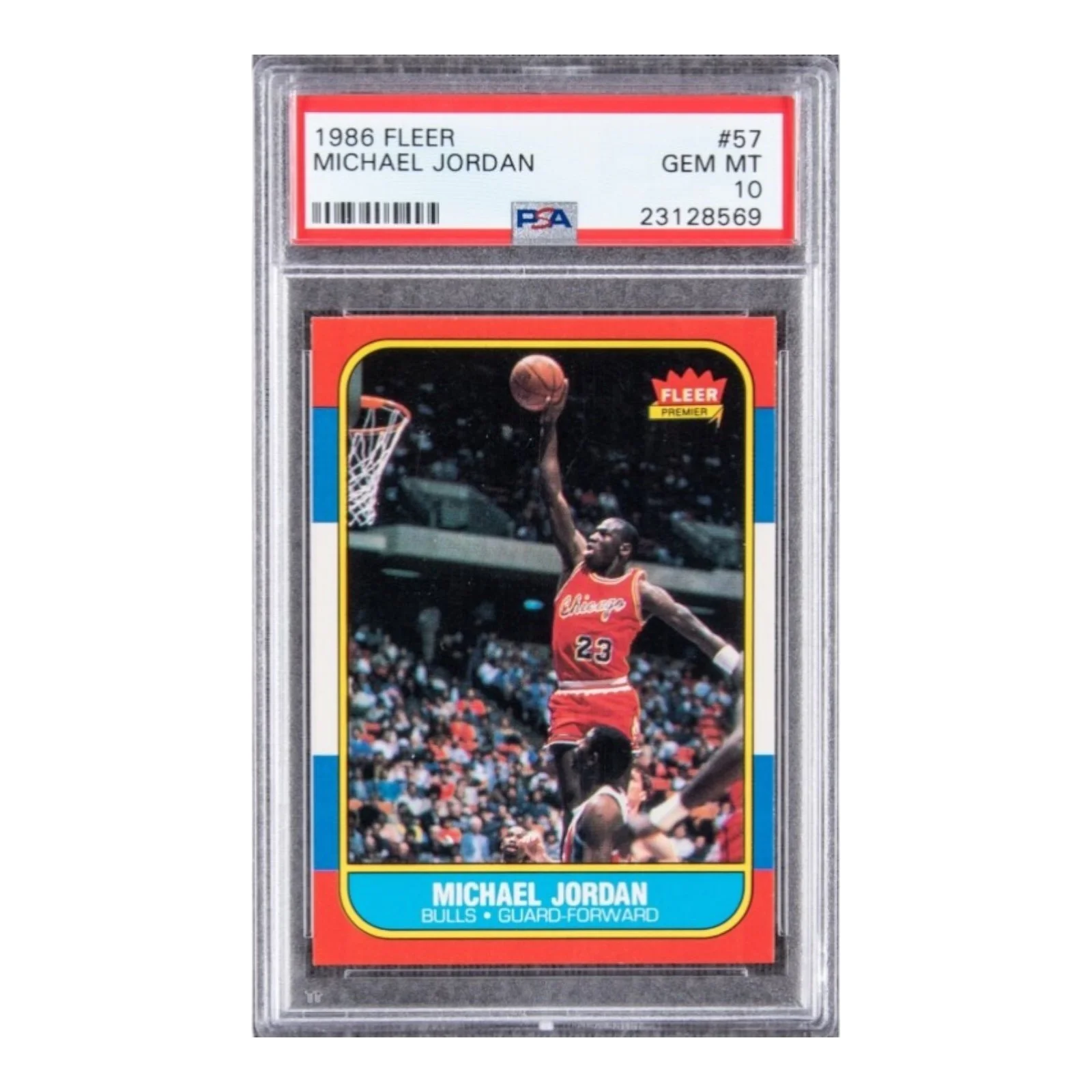
1986–87 Fleer #57 Michael Jordan Rookie Card graded PSA GEM MT 10, featuring iconic early-career Bulls action image and original Fleer Premier design.
Introduction — The Most Counterfeited Modern Card in the Market
The 1986 Fleer Michael Jordan Rookie Card is one of the most recognized and valuable modern-era trading cards. Its cultural importance, grading sensitivity, and auction liquidity have made it a cornerstone asset in sports card collecting.
Because of its reputation, many assume identification is straightforward.
It is not.
Color looks correct. The borders appear sharp. The gloss reflects evenly. Confidence builds quickly — often before structural verification occurs under magnification.
DJR Authentication specializes in professional evaluation of high-value 1986 Fleer Michael Jordan Rookie Cards and related collectible assets.
The reality is that print dot patterns, card stock composition, gloss characteristics, edge fiber structure, and trimming exposure must align precisely. Reprints, counterfeits, recoloring, and subtle alterations circulate heavily in this category.
In this market, assumptions become expensive quickly.
Where Collectors Miscalculate Risk
Assuming surface gloss confirms authenticity
Ignoring microscopic print dot structure
Overlooking color registration drift
Accepting sharp borders without edge fiber analysis
Missing evidence of trimming or micro-shaving
Confusing reprints with authentic originals
Assuming prior grading attempts validate authenticity
The 1986 Fleer Jordan is one of the most altered and counterfeited basketball cards ever produced. Casual inspection is insufficient.
Why This Card Carries Elevated Exposure
Several structural factors increase authentication risk:
High value creates strong incentive for counterfeiting
White borders magnify trimming exposure
Surface gloss inconsistencies reveal reprints
Dot matrix patterns differ between originals and copies
Minor edge alteration can shift a card multiple grading tiers
Even experienced collectors miss subtle indicators that materially affect grading outcomes.
This cannot be confirmed casually.
What Must Be Verified First
Print dot pattern under magnification
Color registration consistency
Border clarity and proportional spacing
Card stock thickness and internal fiber structure
Surface gloss reflectivity characteristics
Evidence of trimming, sanding, or edge reconstruction
Signs of recoloring or surface pressing
These variables must align before authenticity or grading confidence can be established.
Path 1 — Professional Evaluation
Professional review is appropriate:
Before purchasing at PSA 7+ price levels
Prior to grading submission
When prior rejection has occurred
For estate or insurance documentation
When trimming or alteration is suspected
Start with a professional evaluation.
Most clients begin with an Online Fast Opinion to determine authenticity risk and grading exposure before submission.
In-person consultations are available by appointment in Charleston, SC.
Early review protects grading outcomes and financial positioning.
Path 2 — Authentication & Ownership System
For collectors who want structured context before professional review, the 1986 Fleer Michael Jordan Rookie Authentication & Ownership System provides a comprehensive framework.
Print dot and registration diagnostics
Card stock and gloss analysis
Trimming and alteration detection principles
Grading exposure awareness
Long-term ownership and resale positioning strategy
Collectors seeking structured context can explore the DJR Expert Guide Library.
Education strengthens awareness. Professional evaluation protects capital.
Before You Act
Most costly mistakes occur before professional evaluation.
Misidentifying a reprint or altered example as authentic can result in grading failure, auction rejection, and long-term credibility damage.
With the 1986 Fleer Michael Jordan Rookie Card, verification must precede submission, purchase, or sale.