1952 Topps Mickey Mantle Rookie Card — Reprint Exposure, Alteration Risk, and Authentication Reality
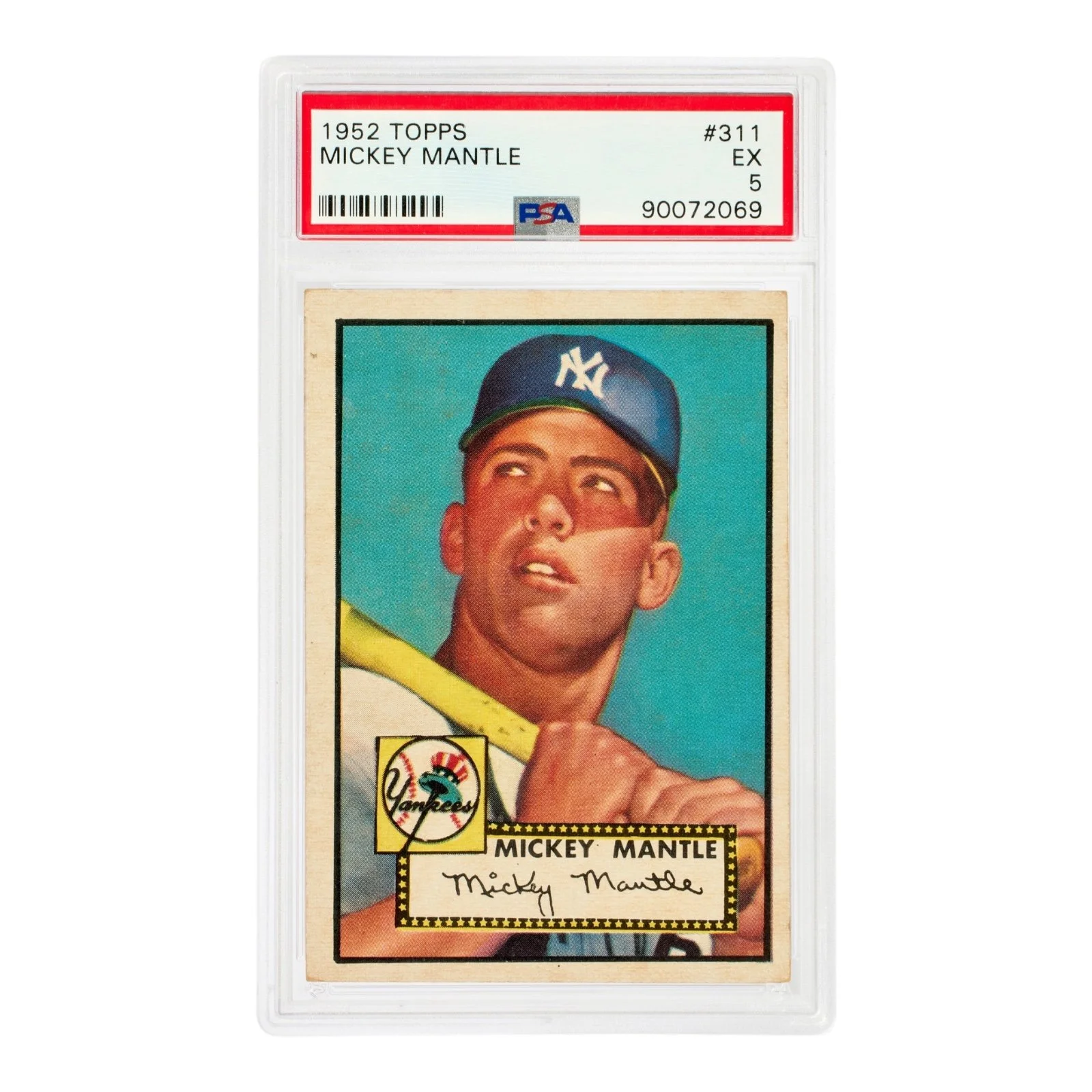
1952 Topps #311 Mickey Mantle rookie card encapsulated by PSA with EX 5 grade, widely regarded as the most iconic baseball card in the hobby and one of the most valuable post-war trading cards ever produced.
Introduction — The Most Misidentified Card in Baseball
The 1952 Topps Mickey Mantle rookie card is widely considered the most iconic baseball card ever produced. Collectors associate it with record-breaking auction prices, historic significance, and the pinnacle of vintage sports card collecting.
Because of that reputation, many assume identification is straightforward.
It is not.
A card may appear correct at first glance. The colors look vibrant. The portrait appears familiar. The card stock feels aged. Confidence builds quickly — often before structural verification occurs.
DJR Authentication specializes in professional evaluation of high-value 1952 Topps Mickey Mantle rookie cards and related collectible assets.
The reality is that printing dot patterns, color registration, card stock composition, edge fiber structure, and surface gloss must align across multiple production characteristics. Many cards presented as authentic examples are actually modern reprints, altered cards, or heavily restored copies.
In this market, assumptions become expensive quickly.
Where Collectors Get Exposed
Assuming surface aging confirms authenticity
Relying on image familiarity instead of print diagnostics
Ignoring card stock thickness and paper structure
Overlooking edge fiber inconsistencies
Accepting trimmed or pressed cards as original examples
Confusing modern reprints with authentic 1952 production
Trusting third-party descriptions without structural review
Vintage trading cards can appear convincing while failing fundamental manufacturing diagnostics. Surface appearance alone cannot confirm authenticity or collector-grade status.
Why This Card Carries Extreme Risk
Several structural factors elevate authentication risk with the 1952 Topps Mickey Mantle rookie card.
First, the card has extraordinary financial exposure. High-grade examples have sold for millions of dollars, which has created strong incentives for counterfeiting and alteration.
Second, the card has been reproduced for decades. Modern reprints, commemorative issues, and counterfeit copies circulate widely in the market.
Third, alteration is common. Trimming, pressing, recoloring, and restoration can dramatically change a card’s appearance while masking structural flaws.
Fourth, grading companies and advanced collectors examine these cards extremely closely. Cards that appear acceptable in private transactions may fail authentication or receive altered designations during formal review.
In this category, small structural discrepancies can represent enormous financial exposure.
This cannot be confirmed casually.
Critical Diagnostics That Must Align
Before authenticity or value can be established with confidence, several structural checkpoints must align:
Printing dot pattern consistent with early 1950s lithographic production
Correct color registration and alignment across image layers
Card stock thickness and internal paper structure consistent with Topps manufacturing
Edge fiber pattern indicating original factory cutting
Surface gloss characteristics consistent with vintage printing processes
Evidence of trimming, pressing, recoloring, or restoration
These variables must align before authenticity or value can be established with confidence.
Isolated characteristics do not confirm authenticity. Structured evaluation considers the card as an integrated object produced through a specific manufacturing process.
Path 1 — Professional Evaluation
Professional evaluation is appropriate:
Before purchasing a high-value example
Prior to grading submission
When selling through auction or private collectors
For insurance or estate documentation
When authenticity or alteration status is uncertain
Start with a professional evaluation.
Most clients begin with an Online Fast Opinion to determine authenticity risk and whether further documentation is warranted.
In-person consultations are available by appointment in Charleston, SC.
Early evaluation protects financial exposure and long-term resale credibility.
Path 2 — Structured Education System
For collectors who want deeper context before professional review, the 1952 Topps Mickey Mantle Authentication & Ownership System provides a comprehensive framework.
The system addresses:
Printing diagnostics and dot pattern analysis
Card stock structure and edge fiber evaluation
Color registration and surface gloss verification
Trimming, pressing, recoloring, and restoration risk
Authentication, grading submission, and ownership strategy
Collectors who want a structured framework before seeking professional review can explore the DJR Expert Guide Library.
Education strengthens awareness. Professional evaluation protects financial outcomes.
Before You Act
Most costly mistakes occur before professional evaluation.
Confidence should follow verification, not precede it.
Early assumptions create irreversible financial exposure — particularly in vintage sports card markets where authenticity and originality define value.
Professional review protects grading outcomes, resale credibility, and long-term collector positioning.
With the 1952 Topps Mickey Mantle rookie card, the most important decision happens before a purchase, submission, or sale.