1907 High Relief Saint-Gaudens Double Eagle — Strike Detail, Edge Lettering, and Authentication Risk
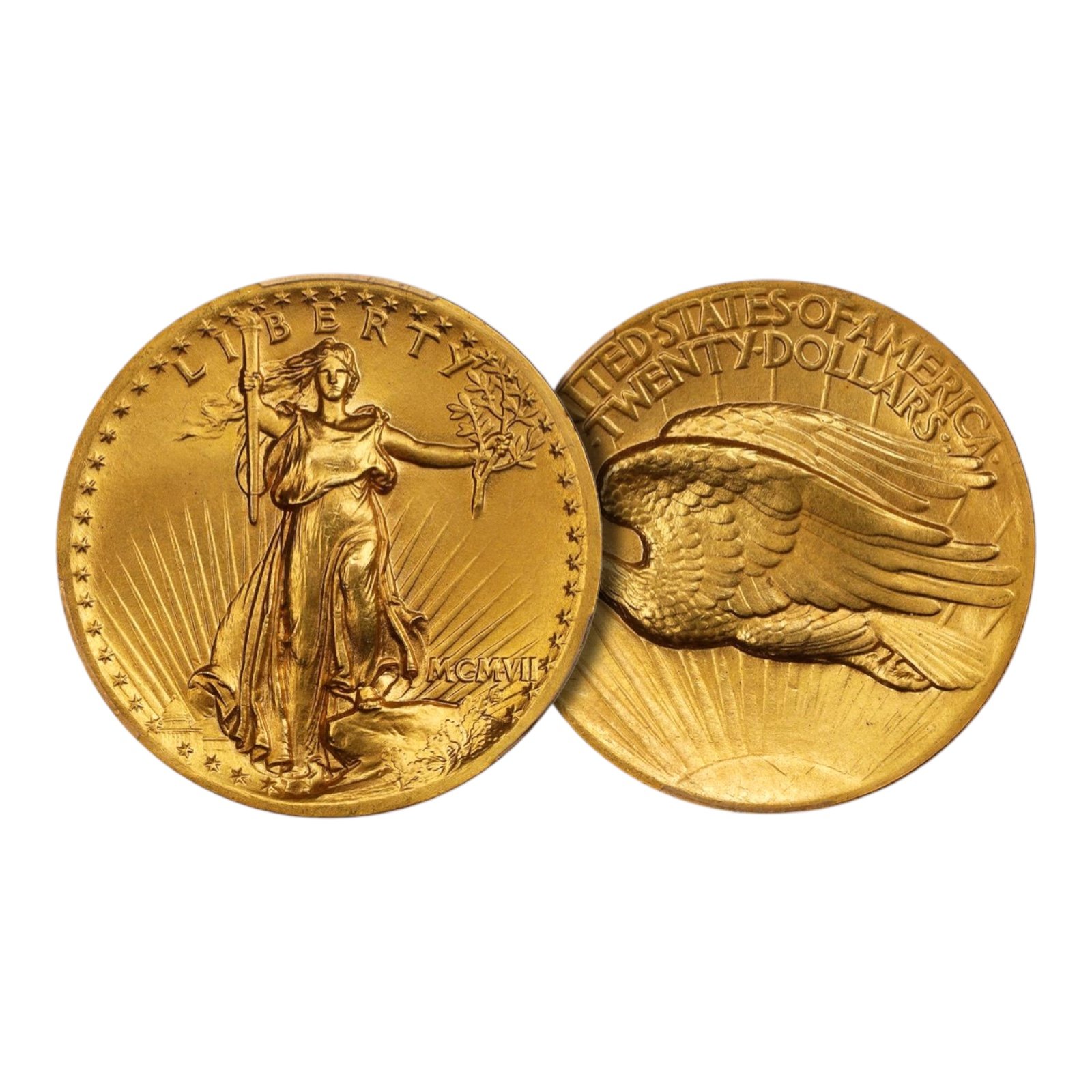
1907 High Relief Saint-Gaudens Double Eagle $20 gold coin featuring the early wire rim strike and Augustus Saint-Gaudens’ iconic Liberty and flying eagle design.
Introduction — One of the Most Important U.S. Gold Coins Ever Produced
The 1907 High Relief Saint-Gaudens Double Eagle is widely regarded as one of the most beautiful coins ever struck by the United States Mint. Designed by renowned sculptor Augustus Saint-Gaudens, the coin represented President Theodore Roosevelt’s vision to elevate American coinage into true works of art.
Because of its reputation and value, the 1907 High Relief Double Eagle is also one of the most scrutinized coins in numismatics.
Many collectors assume identifying an authentic example is straightforward.
It is not.
A coin may appear correct at first glance. The design looks sharp. The gold color appears right. The weight may seem appropriate. Confidence builds quickly — often before structural verification occurs.
DJR Authentication evaluates rare coins through professional authentication and appraisal services.
The reality is that strike detail, edge lettering, die characteristics, luster behavior, and gold composition must align precisely with documented U.S. Mint production methods. Many coins presented as genuine examples are cast copies, altered pieces, or coins that have been cleaned or artificially toned.
In rare coin markets, assumptions become expensive quickly.
Where Collectors Get Exposed
Assuming correct weight confirms authenticity
Ignoring differences in edge lettering characteristics
Missing surface texture differences between struck coins and cast copies
Overlooking signs of cleaning or artificial toning
Accepting altered coins without die analysis
Confusing later restrikes with original High Relief pieces
Relying on appearance rather than structural diagnostics
Rare gold coins require careful structural analysis.
Surface appearance alone cannot confirm authenticity.
Why the 1907 High Relief Double Eagle Carries Elevated Risk
Several structural factors increase authentication risk with this coin.
First, the coin’s artistic design and high value have made it a frequent target for counterfeiters.
Second, cast copies exist. These pieces often mimic weight and appearance but lack the microscopic strike characteristics of genuine coins.
Third, cleaning and surface alteration frequently occur. These processes can change the appearance of a coin while dramatically affecting collector value.
Fourth, die characteristics must match known mint production examples.
Professional evaluation requires examining strike detail, luster flow, die characteristics, and edge lettering together rather than relying on isolated visual cues.
This cannot be confirmed casually.
Critical Diagnostics That Must Align
Before authenticity or collector classification can be established with confidence, several structural checkpoints must align:
Strike detail and sculptural relief characteristics
Edge lettering format and placement
Surface texture and luster flow patterns
Die characteristics and production markers
Weight, diameter, and gold composition
Evidence of cleaning, tooling, or artificial toning
These variables must align before authenticity or collector value can be established with confidence.
Correct weight or appearance alone does not confirm a genuine coin.
Path 1 — Professional Evaluation
Professional evaluation is appropriate:
Before purchasing rare gold coins
Prior to resale or auction consignment
When authenticity is uncertain
For insurance or estate documentation
When surface alterations or cleaning are suspected
Start with a professional evaluation.
Many collectors begin with an Online Fast Opinion to determine authenticity risk and whether additional documentation is warranted.
In-person consultations are available by appointment in Charleston, SC.
Early evaluation protects resale credibility and financial exposure.
Path 2 — Structured Education System
Collectors seeking deeper context before professional review can explore the 1907 High Relief Saint-Gaudens Double Eagle Authentication & Ownership System.
This system addresses:
Strike detail and die characteristics
Edge lettering analysis
Surface texture and luster behavior
Gold composition verification
Cleaning and surface alteration detection
Collectors who want structured context before professional evaluation can explore the DJR Expert Guide Library.
Education strengthens awareness. Professional evaluation protects financial outcomes.
Before You Act
Most costly mistakes occur before professional evaluation.
Confidence should follow verification, not precede it.
Early assumptions about authenticity or originality can create irreversible financial exposure in rare coin markets.
Professional review protects resale credibility, documentation accuracy, and collector positioning.
With the 1907 High Relief Saint-Gaudens Double Eagle, the most important decision happens before purchase, submission, or sale.